
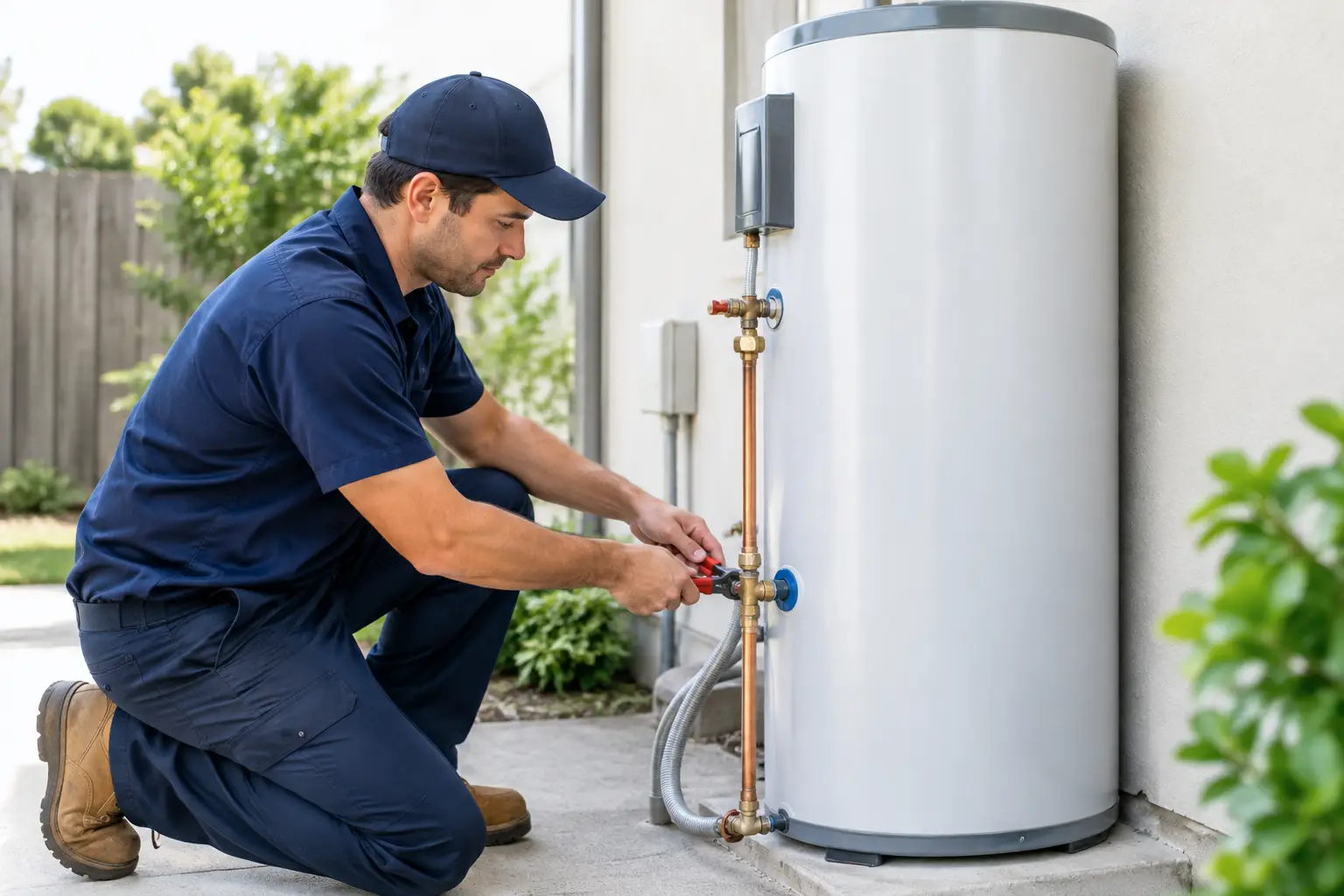
A cold shower is rarely the only problem when a hot water system fails. For a busy Sydney household, it can stop school-day routines, delay laundry, disrupt tenants or put a commercial bathroom out of action. Same day hot water installation is designed to get the right replacement system in place quickly, without treating an important plumbing decision like a rushed patch-up.
The priority is to restore hot water safely and properly. That starts with confirming why the existing unit has failed, checking what system will suit the property, and giving you a clear, flat-rate quote before work begins. One call, one text, sorted - with the proof in the pipework.
When a Hot Water Failure Needs Same-Day Action
Not every hot water issue means the whole system needs replacing. A failed thermostat, faulty heating element, leaking valve or damaged tempering valve may be repairable. In some cases, especially where the unit is relatively new and parts are readily available, a repair can be the most sensible option.
Replacement is usually the better call when the storage tank is leaking, heavily corroded, no longer economical to repair or repeatedly breaking down. Brown or rusty water, pooling around the base of the tank, inconsistent temperature, strange rumbling noises and a complete loss of hot water are all signs worth acting on quickly.
A leaking tank is particularly time-sensitive. Water can damage cabinetry, flooring, walls and nearby electrical equipment, while a gas system fault needs licensed attention straight away. Turning off the water supply to the unit, where safe to do so, can limit damage while help is on the way. Do not attempt to disconnect gas, electrical wiring or relief valves yourself.
For strata properties, rentals and commercial sites, speed also protects the people relying on the building. A prompt diagnosis gives owners, managers and tenants a clear plan instead of an open-ended disruption.
What Happens During Same Day Hot Water Installation?
A good same-day service is organised, not hurried. The first step is a practical assessment of the existing unit, its fuel source, pipework, access and the household's hot water demand. A like-for-like replacement is often the fastest path, but it still needs to be checked properly.
Your plumber will confirm the system type, capacity and installation requirements before recommending a replacement. That includes whether the home has natural gas, LPG or electric supply, where the unit sits, whether there is safe access for removal and delivery, and whether existing valves, drains and pipework meet current requirements.
Once the right system is selected and the quote is approved, the old unit is isolated, drained and removed. The new system is installed with the correct valves, connections, safety controls and discharge arrangements. Gas connections are tested for leaks, electrical components are checked by the appropriately licensed professional where required, and the system is commissioned before the job is signed off.
The final checks matter. Water temperature needs to be safe at the tap, pressure relief needs to operate as intended, and all visible connections need to be dry and secure. The work area should be left clean, with the old unit removed and no mystery mess left behind for you to deal with.
Choosing the Right Replacement System
The fastest available unit is not automatically the best unit for your home. System selection depends on how many people use the property, the number of bathrooms, peak morning demand, available energy supply and where the unit can be installed.
A gas storage system can be a practical replacement where an existing gas tank is already in place. It stores a set volume of hot water and can suit households needing several outlets in use over a short period. Gas continuous-flow systems heat water on demand and take up less space, but their performance depends on correct sizing and gas supply capacity.
Electric storage systems can be suitable where gas is unavailable or where an existing electric installation is straightforward to replace. They can be cost-effective to install, though running costs and off-peak arrangements should be considered. Heat pump systems can offer strong energy efficiency, but they are not always a same-day option if the property needs electrical upgrades, a new location or more detailed planning.
For many urgent replacements, like-for-like is the quickest and least disruptive choice. If your household has outgrown the old system, however, replacing it with the same size simply because it is convenient can lead to more cold showers later. The right answer balances today’s urgency with the way you actually use hot water.
Why Installation Conditions Matter
Sydney homes are not all set up the same way. A system tucked beneath a narrow side passage, mounted on a balcony, installed in a cupboard or located under a house can change the scope of work. Older homes may have ageing pipework, non-compliant drainage or valves that need upgrading before a new unit can be safely connected.
Access is another real-world factor. A plumber may need to navigate stairs, tight gates, landscaped paths or apartment loading rules. In a strata building, there may be requirements around work hours, isolation notices and common-property access. These details do not have to derail a same-day installation, but they should be identified early so there are no surprises.
A premium service means being direct about those variables. If a replacement can be completed that day, you should know what is included. If an upgrade, special-order system or additional trade is needed, you should understand why, what it involves and what can be done immediately to keep the property safe.
Preparing for the Plumber’s Arrival
You can help make an urgent replacement smoother by taking a few simple steps. Clear the area around the hot water unit where possible, including stored items, pot plants and outdoor furniture. Keep pets away from the work zone, and make sure the plumber can access the property, switchboard and water meter if needed.
If you know the make, model or approximate age of the current system, have those details ready. Photos of the unit and its connections can also help when booking, especially if access is tight. For gas units, mention any smell of gas, unusual noises or visible damage. For electric units, note whether the circuit breaker has tripped.
Avoid draining or dismantling the unit yourself. Hot water systems operate under pressure, and incorrect handling can create a scalding, flooding, electrical or gas risk. A licensed plumber will isolate the system safely and manage the replacement from there.
The Difference Between Fast and Rushed
Same-day service should never mean shortcuts. A new hot water system still needs correct support, compliant pipework, safe temperature control and thorough testing. Skipping those steps may get water flowing sooner, but it can create leaks, poor performance, unnecessary energy use or a safety issue down the track.
That is why transparent quoting and clear communication matter as much as availability. You deserve to know whether you are paying for a repair, a direct replacement or a system upgrade, and what each option means for your household. The cheapest immediate option is not always the best value if it leaves you with inadequate capacity or another breakdown within a short time.
Pioneer Plumbing Co. approaches urgent hot water work with the same care as planned plumbing projects: arrive on time, explain the fault in plain English, protect the property, and fix the root cause rather than applying a temporary patch. Licensed, insured workmanship and a lifetime workmanship warranty provide confidence once the hot water is back on.
After Your New System Is Installed
Most storage systems need time to heat a full tank after installation, while continuous-flow systems can provide hot water once commissioning is complete. Your plumber should explain what to expect for your specific unit, including how to operate it, where the isolation valves are and what signs would warrant a follow-up call.
Keep the area around the unit accessible and check occasionally for drips, especially in the first day or two. If water appears around the base, the temperature is unstable or a warning light appears, report it promptly. Small concerns are easier to address before they become a bigger interruption.
Hot water is one of those services you only notice when it disappears. Choosing a team that can respond quickly, assess properly and install with care means your household can get back to normal with confidence - and stay there.