
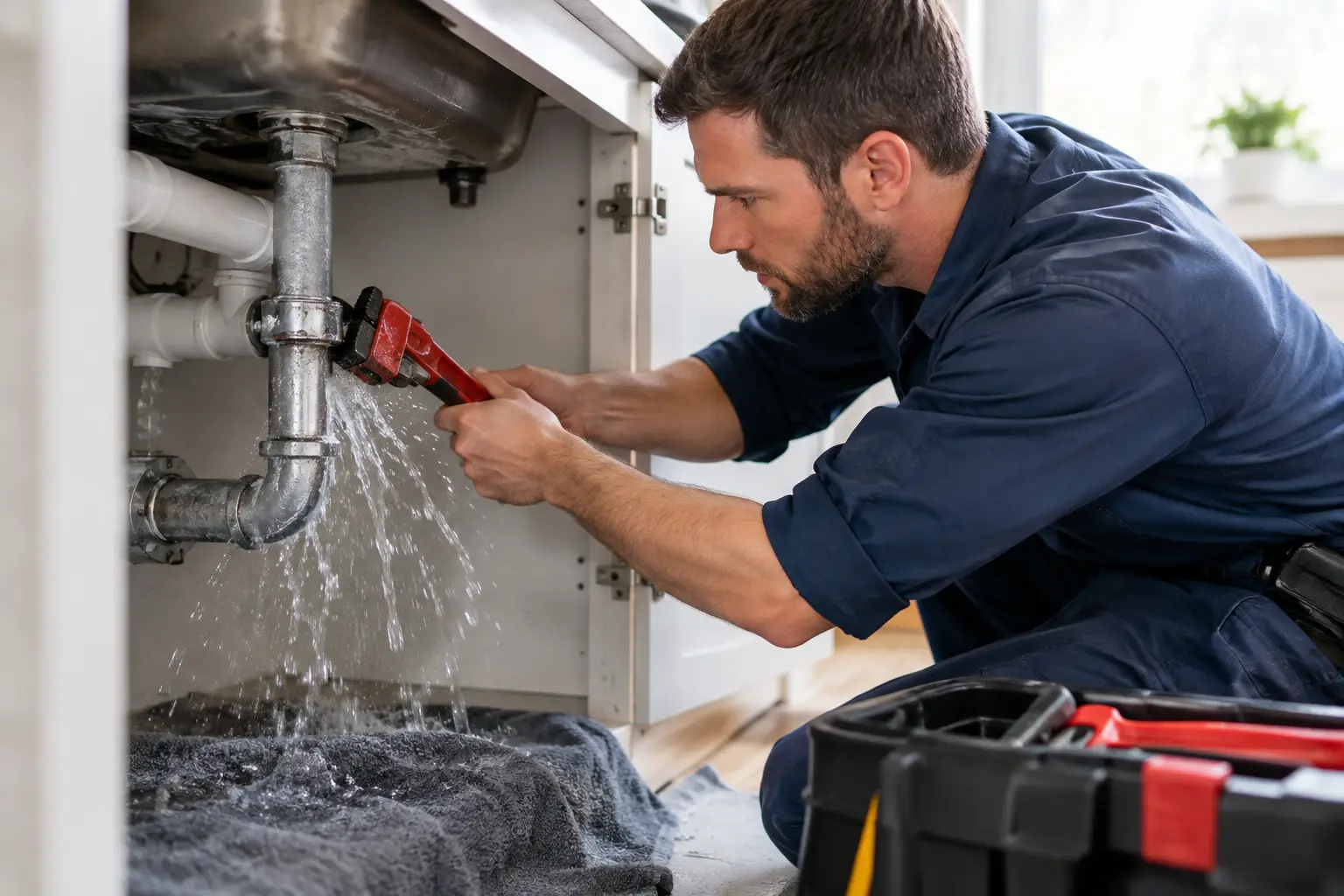
Water spreading across a hallway, through a ceiling or into a shopfront is not a wait-and-see problem. Burst pipe emergency repair starts with limiting the flow safely, then finding out why the pipe failed in the first place. A quick patch may stop the immediate mess, but a proper repair protects your property from a repeat failure, hidden moisture and a much larger bill later.
For homes, strata buildings and commercial sites across Sydney, the first few minutes matter. The goal is simple: stop the water, protect people and belongings, and get a licensed plumber on site to make the fault safe.
What to do when a pipe bursts
A burst pipe can look dramatic, but there is a clear order of priorities. Do not start pulling apart walls, ceilings or fittings to find the leak. Water can travel a surprising distance from the actual break, particularly in roof cavities, under floors and behind bathroom linings.
- Turn off the water supply. Your main isolation valve is often near the water meter at the front boundary, in a meter box or near where the water service enters the building. Turn the valve clockwise where possible. If the burst is isolated to a toilet, basin or hot water unit, a local shut-off valve may be enough.
- Turn off power if water is near electricity. Do not touch switches, appliances, power points or the electrical board while standing in water. If there is any doubt, keep clear and arrange an electrician after the water is isolated.
- Move what you can safely. Lift rugs, valuables, stock and furniture out of the affected area. Place buckets under active drips and use towels to contain water, but do not put yourself at risk to save possessions.
- Call a licensed emergency plumber. Tell them where the leak is visible, whether the water has been shut off, and if ceilings are sagging or electrics are affected. Clear details help the plumber arrive prepared.
If water is coming through a ceiling, keep people out from beneath it. A bulging ceiling can hold significant weight. Do not puncture it unless a qualified professional has assessed the situation.
Why burst pipes happen
Pipes do not usually fail without a reason. Ageing copper pipework can develop pinhole corrosion. Plastic fittings can split after movement, poor installation or pressure stress. A damaged flexi hose under a vanity can rupture without warning, while a leaking pipe in a wall may weaken slowly before finally giving way.
Sydney properties also face their own mix of conditions. Older homes can have ageing galvanised or copper services, while renovated homes may have original pipework hidden behind new finishes. Tree roots, ground movement and pressure issues can affect external lines. In commercial properties, frequent use, plant-room equipment and after-hours faults add another layer of risk.
The visible split is only part of the job. A quality repair considers water pressure, pipe condition, fitting compatibility and whether nearby sections are likely to be close behind. That is how you avoid paying for the same emergency twice.
How burst pipe emergency repair should be handled
Once the water is isolated, the plumber should confirm the source rather than guess. Sometimes the obvious leak is a failed mixer hose or flexi connector. Other times, water appearing near a skirting board has travelled from a pipe several metres away.
Access needs to be considered carefully. It may be necessary to remove a small section of plasterboard, cabinetry backing or external cladding to reach the pipe. The trade-off is straightforward: minimal access is preferable, but not if it leaves damaged pipework, wet insulation or an unreliable join hidden out of sight. The right approach is the least invasive method that still allows a durable, code-compliant repair.
The damaged section is removed and replaced with suitable materials, not simply wrapped or taped. The repaired line is then pressure tested before the water is restored. This matters. A pipe can appear fixed at low pressure, then leak again once the system is fully operating.
At Pioneer Plumbing Co., the focus is on getting to the root of the problem, with clear communication before work begins and clean work practices while the repair is underway. You should know what failed, what needs to be repaired and what the next steps are before the job moves forward.
Do not rely on a temporary patch
Emergency tape, clamps and sealants can have a place as a very short-term measure when water needs to be controlled before help arrives. They are not a dependable repair for a burst pipe inside a wall, ceiling or floor. A temporary patch can conceal a continuing leak, allowing moisture to soak framing, insulation, carpets or cabinetry.
The same applies to simply turning the water back on after a leak appears to have stopped. Water damage often develops after the visible event. Timber can swell, plasterboard can soften, mould can form and engineered flooring can lift. If the leak has been running for any period, drying and restoration may be needed alongside the plumbing repair.
For insurance purposes, take clear photos or video of the affected area before extensive clean-up where it is safe to do so. Keep invoices and records of emergency attendance, repairs and drying work. Your insurer will advise what is covered under your policy, but prompt action and good documentation can make the process easier.
When the problem is hidden
Not every burst pipe announces itself with a spray of water. A sudden drop in water pressure, a water meter that continues moving when all taps are off, damp carpet, peeling paint, a musty smell or unexplained pooling outside can all point to a concealed leak.
Finding the source without unnecessary damage is where diagnostic experience counts. Depending on the property and pipe location, a plumber may use pressure testing, acoustic leak detection, thermal imaging or inspection equipment to narrow down the fault. These methods do not eliminate the need for access in every case, but they can reduce guesswork and avoid opening up the wrong area.
In strata or commercial buildings, the responsibility for pipework can depend on where the fault sits. A pipe serving one lot may be different from a common property line, and a retail tenancy may have separate obligations from a base-building service. Notify the strata manager, building manager or property manager early, but do not delay isolating a serious leak while responsibility is being clarified.
After the repair, protect the property
A successful burst pipe repair is the beginning of recovery, not always the end of it. Ask whether the surrounding materials need drying, whether the water pressure was checked and whether other nearby pipes show signs of age or corrosion. If one failed flexi hose was installed at the same time as others, for example, a proactive inspection may be sensible.
For households, it is also worth making sure everyone knows where the main water shut-off valve is and that it can be turned easily. For businesses and strata sites, label isolation points and include them in emergency procedures. One call and one text is far easier when the person on site can immediately stop the water.
A burst pipe is stressful, but it does not have to become a drawn-out property disaster. Act quickly, stay safe around electricity, and choose a plumber who will repair the cause rather than cover the symptom. Every drop matters when water is where it should not be, and the proof is in the pipework long after the floor is dry.