
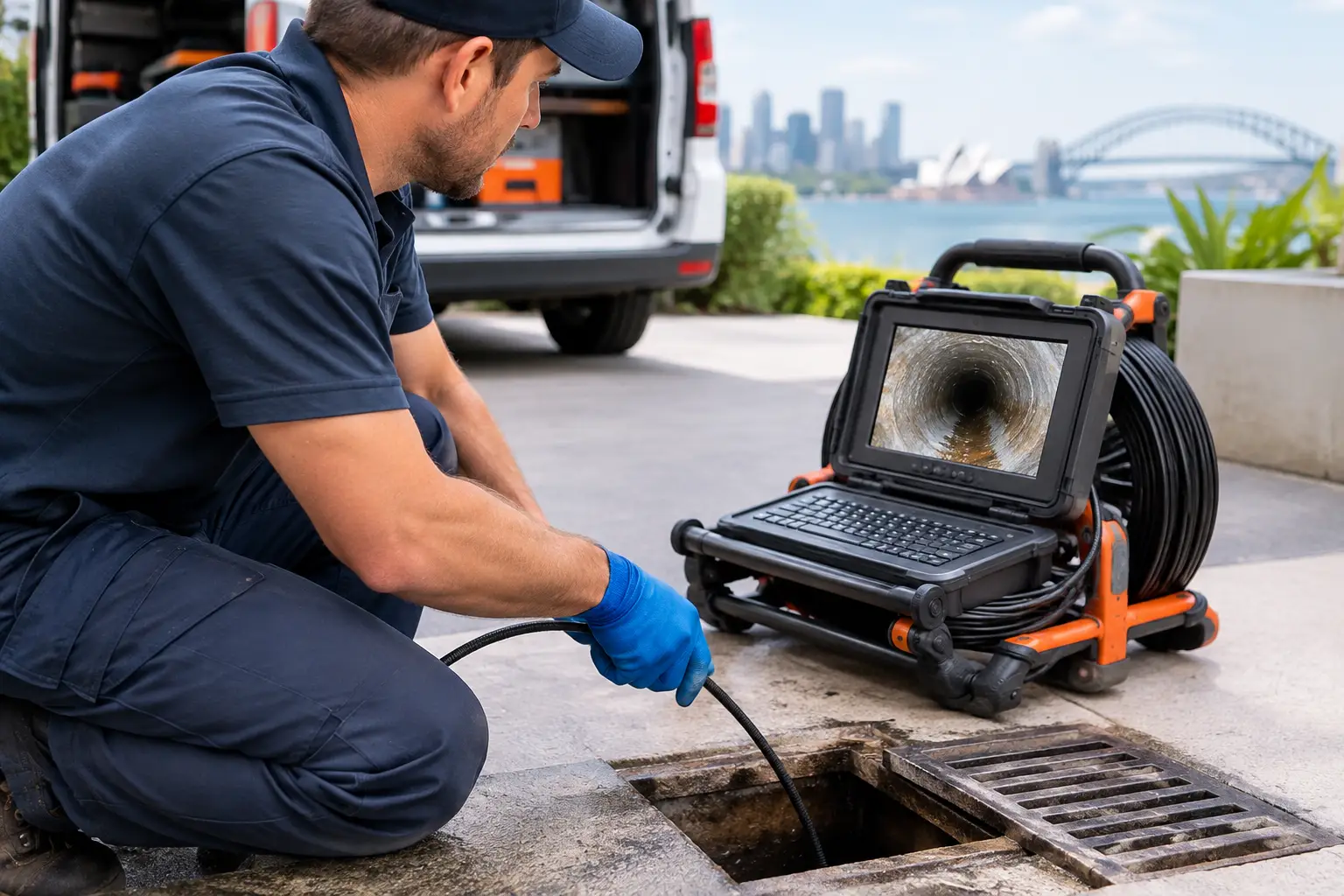
A blocked drain is frustrating. A blocked drain that keeps returning, floods the yard or affects more than one fixture needs answers, not another temporary clear-out. The CCTV drain inspection cost is often a worthwhile investment because it shows exactly what is happening inside the pipe before money is spent on repairs that may not address the real cause.
For Sydney homes, strata properties and commercial sites, a camera inspection can reveal tree-root intrusion, broken pipework, poor pipe falls, collapsed sections and construction debris without digging up the garden, driveway or bathroom floor. It is practical diagnostic work, done properly.
What does a CCTV drain inspection cost?
In Sydney, a standalone CCTV drain inspection will commonly cost from around $250 to $500, depending on the drain, site access and the level of reporting required. A straightforward inspection of an accessible residential sewer line will generally sit at the lower end of that range. A larger property, difficult access point, multiple drainage lines or a detailed report for a strata manager, insurer or property purchase can increase the cost.
Sometimes the inspection is completed as part of blocked-drain clearing work. In that case, the camera component may be priced within a broader drain service or quoted as an additional diagnostic step. This can be good value when a high-pressure jetter has restored flow but the plumber needs to confirm why the line blocked and whether it is likely to happen again.
The right question is not only, “What is the camera inspection price?” It is also, “What information will I receive, and what decision will it help me make?” Clear footage, an explanation in plain English and a practical repair recommendation are where the real value sits.
What affects CCTV drain inspection cost in Sydney?
Every drainage system has its own story. Older homes across the North Shore, Northern Beaches, Hornsby Shire and Hills District may have original earthenware pipes, mature trees and extensions built over decades. Newer homes can still have issues, including displaced joints, building debris or poor installation. The scope of the inspection should reflect the property, rather than a one-size-fits-all price.
Access to the drain
A plumber needs a suitable entry point to feed the camera into the line. An accessible inspection opening near the boundary trap or external sewer is usually straightforward. If access is concealed, damaged, beneath a deck or located in a confined area, extra investigation may be needed before the camera can enter the system safely.
A blocked line can also affect access. In some cases, the drain must be cleared first so the camera can travel through the pipe and produce usable footage. There is little point sending a camera into standing wastewater if it cannot see past the obstruction.
The size and length of the pipe run
Inspecting a short residential branch drain is different from tracing multiple sewer and stormwater lines across a large block or commercial premises. Longer runs take more time, and larger sites may have several fixtures, inspection points and connections to assess.
For strata and commercial properties, the inspection may need to identify which line serves which tenancy or lot. That planning and documentation can be particularly valuable when responsibility for the repair needs to be clearly established.
The problem inside the pipe
Tree roots may be a simple maintenance issue if they are light and the pipe remains structurally sound. If roots have entered through cracked joints, however, clearing them without addressing the damaged pipe can lead to another blockage soon after.
Other findings can be more significant: a collapsed section, a major offset in the pipe, a sag that holds waste, or a line that has been crushed by ground movement. The camera inspection itself may cost the same, but the findings will shape the repair budget. A good plumber will separate the diagnostic cost from the recommended remedial work so there are no surprises.
Reporting requirements
A homeowner may simply need footage and a clear recommendation. A property manager, builder, insurer or buyer may need a more formal report with pipe location, observations, images and repair options. This takes additional time and is usually reflected in the quote.
If you are buying a property, arranging a renovation or dealing with a recurring drainage issue, ask for the footage and findings in a form you can keep. It creates a useful record of the condition of a pipe that cannot be seen from the surface.
When a camera inspection is worth paying for
Not every blocked basin needs a camera. A local blockage caused by hair, soap build-up or a simple obstruction may clear quickly with the right tools. But repeated symptoms are a different matter.
A CCTV inspection is usually a sensible next step when toilets gurgle, drains back up after clearing, wastewater appears outside, multiple fixtures drain slowly, or the problem returns after heavy rain. It is also valuable before extensive drain repairs, concrete cutting or excavation. Seeing the defect first can prevent unnecessary disruption and help target the repair to the correct location.
For homeowners with established gardens, paved courtyards or renovated bathrooms, the savings can be substantial. Rather than digging on assumption, the plumber can identify the likely issue and where it sits along the line. That means a more informed conversation about whether the best option is clearing, spot repair, pipe relining or replacement.
What should be included in the service?
A quality CCTV drain inspection is more than inserting a camera and saying the pipe looks blocked. The plumber should explain the purpose of the inspection, check the relevant line methodically and talk you through the result without drowning you in trade jargon.
At a minimum, you should expect clear communication about what was inspected, what was found and what should happen next. Where appropriate, footage or images should be available for your records. If a repair is needed, the quote should explain the proposed method, likely access requirements and whether the solution addresses the root cause rather than masking it.
It is also worth asking whether the camera will be used to verify the drain after clearing or repair. Verification matters. A line may be flowing again, yet still contain root growth, a crack or a partial obstruction that will create trouble later.
Why the cheapest inspection is not always the best value
A low call-out price can look attractive when water is backing up, but compare what is actually included. Does the price cover camera time, locating the issue, footage, reporting and an explanation? Will the plumber provide a firm repair quote if a defect is found? Are they licensed, insured and prepared to stand behind the work?
The goal is not to turn a simple drain problem into a major project. It is to get reliable information, then choose the proportionate fix. Sometimes that means routine maintenance. Sometimes it means acting early before a cracked sewer line damages landscaping, building finishes or neighbouring property.
At Pioneer Plumbing Co., the approach is straightforward: arrive on time, inspect properly, keep the work area tidy and explain the options clearly. The proof is in the pipework, and a camera inspection gives you the proof before you commit to the next step.
If your drains have become a recurring concern, arrange the inspection before the next blockage chooses the timing for you. A clear view inside the pipe can turn an uncertain, messy problem into a planned repair with a sensible path forward.