
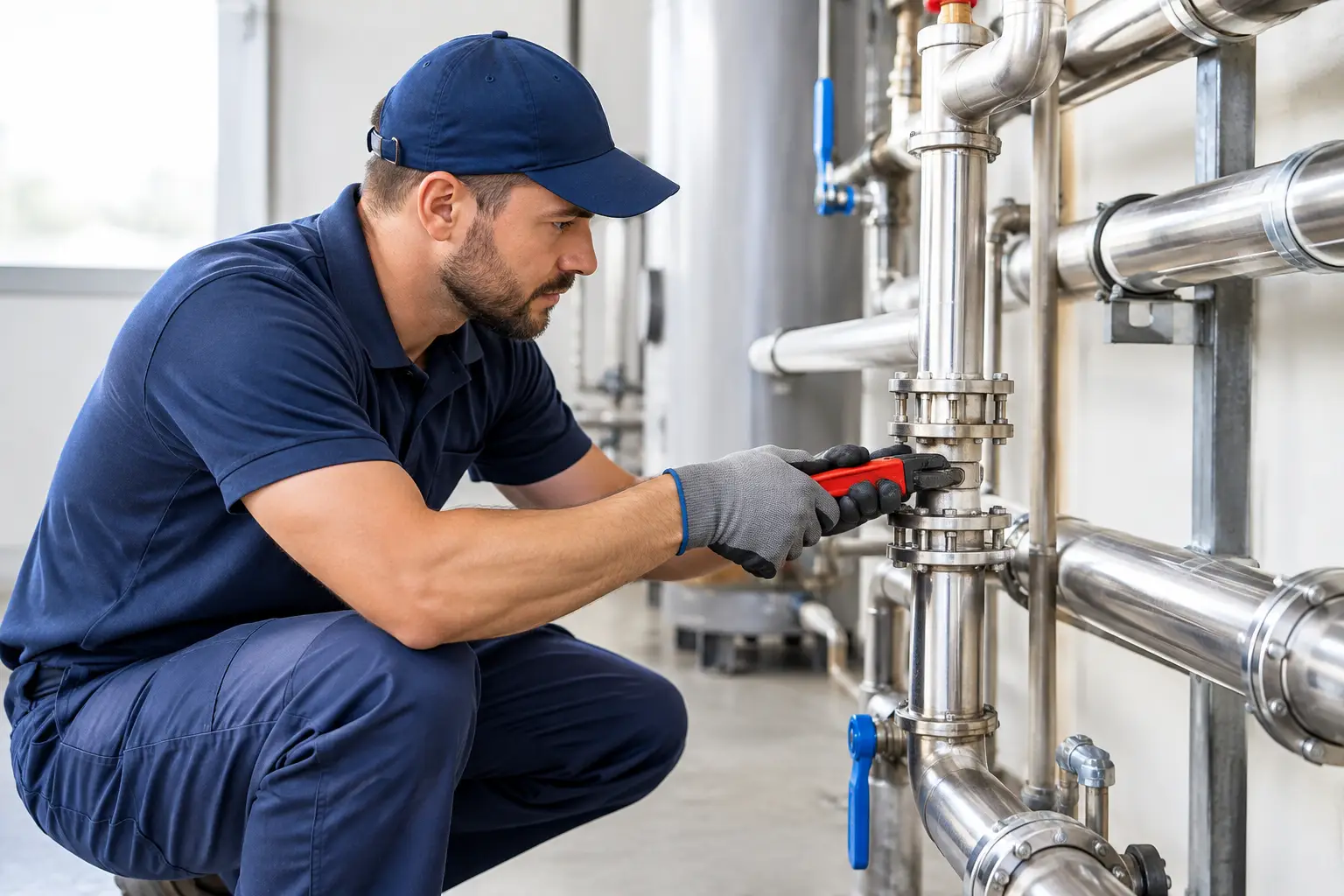
A blocked toilet before a busy Saturday service, a burst flexi hose above a retail storeroom or no hot water for a gym at 6 am can quickly become more than a plumbing problem. It affects customers, staff, tenants, trading hours and your reputation. Commercial plumbing maintenance gives Sydney businesses a practical way to find risks early, plan repairs around operations and avoid the cost of an unexpected shutdown.
For property managers, strata committees and business owners, the goal is not to service plumbing for the sake of it. It is to keep water, gas and waste systems safe, compliant and dependable, while making informed decisions about repairs before a minor fault turns into an urgent call-out.
Why reactive plumbing costs more
A reactive approach often looks cheaper until something fails. A slow drain may be manageable for weeks, but grease, wipes, scale or tree roots can eventually create a complete blockage. By then, there may be wastewater on floors, a closed bathroom, unhappy tenants and an after-hours response required.
The same applies to small leaks. A dripping valve or toilet that continuously runs can waste substantial water over time. Hidden leaks behind walls, under concrete or above ceilings can damage finishes, encourage mould and affect neighbouring tenancies before anyone sees the source.
Planned maintenance does not mean replacing every ageing part immediately. It means assessing condition, usage and risk, then prioritising work properly. A quiet office suite has different plumbing demands from a restaurant, childcare centre, medical practice, apartment building or high-traffic retail site. The maintenance plan should reflect that.
What commercial plumbing maintenance should cover
A useful programme begins with a clear picture of the property. That includes the location of isolation valves, hot water equipment, drainage access points, amenities, kitchen plumbing, gas appliances and any known problem areas. Accurate records reduce guesswork when a fault occurs and help a plumber respond faster.
Water supply, valves and leak detection
Water pressure, visible pipework, taps, toilets, tempering valves and isolation valves should be checked for signs of leakage, corrosion, poor operation or excessive wear. Valves that have not been operated for years can seize at the worst possible moment, making a minor leak harder to isolate.
Where water use is unusually high or there is staining, dampness or a persistent musty smell, targeted leak detection may be the sensible next step. The right diagnostic method can locate a concealed issue without unnecessary cutting into walls, ceilings or flooring. That protects the building and keeps disruption to a minimum.
Drains, grease and sewer lines
Drain maintenance is particularly important in hospitality, retail centres, strata buildings and older Sydney properties with established trees. Slow basins, gurgling toilets, recurring odours and overflowing gullies are early warnings, not inconveniences to ignore.
High-pressure jetting can clear built-up debris, while a CCTV drain inspection shows what is happening inside the pipework. This is the difference between repeatedly clearing the same blockage and identifying the root cause, whether it is grease accumulation, cracked pipework, root intrusion, displaced joints or an incorrectly graded line.
For food businesses, grease management needs to suit actual trade volume. An undersized or neglected grease trap can lead to odours, drainage failures and difficult service periods. Scheduled cleaning and inspection are usually far less disruptive than dealing with a kitchen drain blockage during peak service.
Hot water and gas systems
Commercial hot water systems work hard, particularly in gyms, salons, accommodation, kitchens and healthcare settings. A maintenance visit should look beyond whether the unit is currently producing hot water. It should consider pressure relief operation, visible connections, temperature control, signs of corrosion and the condition of associated valves.
Gas equipment also requires qualified attention. Any smell of gas, irregular appliance operation, damaged pipework or concern around gas supply should be treated seriously and assessed by a licensed gas fitter. There is no place for temporary fixes where gas safety is involved.
Amenities and high-use fixtures
Toilets, urinals, basins, sensor taps and accessible amenities receive constant use in commercial settings. Small faults can become a source of complaints quickly. A running cistern, loose tapware, poor flush performance or faulty sensor affects the customer experience as well as water efficiency.
Checking fixtures before they fail helps facilities teams schedule repairs during quieter periods. It also allows replacement parts and finishes to be matched where presentation matters, rather than settling for a rushed, mismatched repair.
Setting the right maintenance frequency
There is no single schedule that suits every site. A small office may need an annual inspection with responsive repairs as required. A café, restaurant, shopping complex or strata property may benefit from quarterly checks, particularly where grease, high foot traffic or shared drainage systems are involved.
The condition and age of the building matter too. Older properties may have legacy pipework or drainage lines that need closer monitoring. Newer fit-outs can still develop issues if equipment is heavily used or installation details were not completed properly.
A sensible programme combines routine inspections with clear triggers for earlier attendance. Those triggers could include repeated blockages, unexplained water bills, changes in water pressure, damp patches, hot water fluctuations or tenant reports of odours. Logging these details gives your plumber valuable context and makes fault-finding more efficient.
The records that protect your property
Maintenance documentation is not just paperwork. For strata managers and commercial operators, it creates a reliable history of what was inspected, what was found, what was repaired and what may need attention next. This supports budgeting, communication with owners and decisions about capital works.
After significant drainage work, CCTV footage can provide confirmation of the pipe condition and the result of clearing. For repairs, clear notes and photographs can help distinguish between a one-off fault and a recurring issue. If a problem returns, the next visit starts with evidence rather than assumptions.
It is also worth keeping practical site information accessible: shut-off locations, after-hours contacts, tenancy access requirements and any sensitive areas such as server rooms, medical suites or food-preparation spaces. These details help minimise disruption when urgent work cannot wait.
Choosing a plumbing partner for commercial sites
Commercial work needs more than technical skill. Your plumber needs to arrive when promised, communicate clearly with site contacts and work cleanly around staff, customers and tenants. For a live business environment, discreet conduct and good planning matter as much as the repair itself.
Ask how faults will be diagnosed, whether pricing is explained before work begins and how completed work is documented. A quality provider should be comfortable explaining options in plain English. Sometimes a repair is appropriate; other times, repeated repairs are false economy and replacement is the better long-term call.
Look for a licensed and insured team that can handle water, gas and waste systems under one accountable service model. That avoids the frustrating cycle of multiple contractors pointing to someone else when a fault crosses between plumbing systems.
Pioneer Plumbing Co. approaches commercial maintenance with that long-term view: arrive prepared, identify the cause, protect the premises and leave the site tidy. The proof is in the pipework, but it is also in how smoothly your operation continues.
Act on the small signs
A commercial property rarely gives only one warning. It may start with a tap that will not shut off cleanly, a drain that clears slowly after lunch, a ceiling mark near a bathroom or a hot water system that takes longer to recover. Acting at that point gives you choices around timing, scope and cost.
The best maintenance plan is one your team can actually follow. Keep it relevant to the way your premises operates, review it after major changes or repeat faults, and use every visit to make the next one easier. One planned call can protect a great deal more than pipework.