
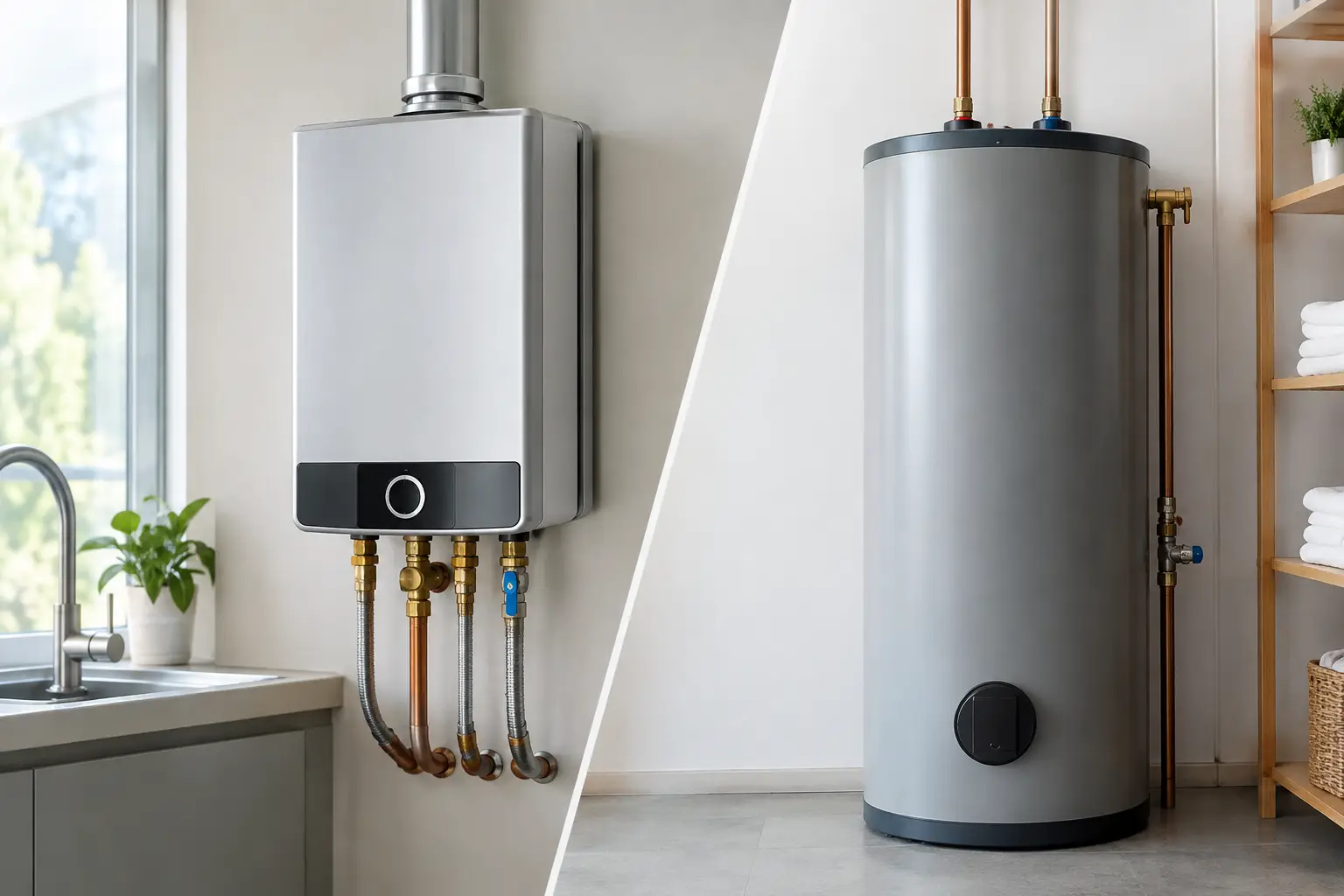
A hot shower that runs cold halfway through the morning routine is not a minor inconvenience. It is a clear sign that your household’s hot-water setup may no longer suit the way you live. When weighing up continuous flow versus storage heaters, the right answer comes down to demand, available services, installation conditions and what you expect from the system over the next decade.
Both options can provide dependable hot water in a Sydney home. But they work very differently. A proper replacement is not about fitting the same type of unit because it is already there. It is about sizing and installing a system that performs properly at your taps, showers and appliances - without nasty surprises on the day.
Continuous Flow Versus Storage Heaters: The Core Difference
A storage water heater heats and holds a set volume of water in a tank. When you turn on a hot tap, that stored water is delivered to the fixture and cold water enters the tank to be heated for later use. Common examples include electric storage tanks, gas storage tanks and heat-pump systems with storage cylinders.
A continuous flow heater, often called an instantaneous heater, heats water only when you need it. Cold water passes through the unit, a burner or electric element heats it rapidly, and hot water is sent straight to the outlet. Most whole-home continuous flow systems in Sydney are gas-fired, although electric instantaneous units are used in some specific applications.
The practical distinction is simple: storage systems have a finite tank of hot water available at any one time. Continuous flow systems do not run out of stored hot water, but they do have a maximum flow capacity. If too many outlets demand hot water at once, the temperature or flow can be affected.
When a Continuous Flow System Makes Sense
Continuous flow hot water suits many households that want a compact system and steady hot water for consecutive showers. Because there is no large tank sitting full of heated water, it can reduce standing heat loss. It is also a strong option where outdoor space is tight, such as townhouses, apartments and homes with carefully planned renovations.
For a family, the appeal is obvious. One person can shower after another without waiting for a tank to recover, provided the unit has been correctly sized. A quality gas continuous flow heater can also be a practical replacement for an ageing gas storage tank, particularly when the property already has an adequate gas supply and compliant installation location.
That last point matters. A continuous flow unit is not automatically suitable just because gas is connected to the home. The gas pipe must be sized for the appliance’s demand, water pressure must be assessed, and the unit needs suitable clearances from openings, boundaries and other services. Larger gas units can require upgrades to existing pipework. In some cases, the installation work - not the unit itself - is what determines whether the change makes financial sense.
Continuous flow units are also more sensitive to low-flow situations. Some older tapware, water-saving shower heads or very small draws of water may not activate a unit consistently. Modern quality systems manage this well, but the plumbing needs to be checked as a whole rather than treated as separate parts.
Capacity is about simultaneous use
A continuous flow system is rated by litres per minute, not litres stored. A modest unit may be fine for a one-bathroom home where only one shower runs at a time. A larger household with two bathrooms, a kitchen tap and a washing machine operating together may need a higher-capacity model, or a split system with separate units serving different parts of the home.
Sydney’s incoming water temperature changes through the year. In winter, colder water entering the unit means it takes more energy to achieve your chosen outlet temperature. This is another reason an experienced plumber will consider household demand and local conditions before recommending a model.
Where Storage Heaters Still Shine
Storage heaters remain a sensible choice for many homes. They are straightforward, familiar and available in a wide range of capacities and fuel types. If your household has predictable peak use, a correctly sized tank can supply plenty of hot water with minimal fuss.
Electric storage tanks are often the simplest replacement where there is no gas connection, or where upgrading gas infrastructure would be disproportionate to the job. Depending on the electricity tariff and system design, they can heat during off-peak periods and store water for use across the day. However, a tank that is too small can leave the last person in the queue with a lukewarm shower. A tank that is unnecessarily large costs more to purchase and can waste energy maintaining water you do not use.
Gas storage systems can offer faster recovery than conventional electric storage tanks. They can be a practical choice where an existing tank location, gas supply and household habits already work well. The trade-off is physical space. A cylinder needs room, access for safe servicing and a suitable base. It also remains exposed to wear over time from internal corrosion, valves and fittings.
Heat-pump water heaters sit in the storage category but deserve separate consideration. They use electricity to move heat from the surrounding air into the tank, rather than relying only on a conventional electric element. They can be highly efficient and may be particularly attractive for households moving away from gas. Their upfront cost, location requirements, operating noise and available solar generation should all be reviewed before making the switch.
Upfront Cost, Running Cost and Service Life
There is no honest one-line answer to which system is cheapest. The purchase price is only one part of the decision.
A like-for-like storage tank replacement may be relatively economical when the existing plumbing, electrical supply or gas connection is in good order. Moving from storage to continuous flow can cost more if new gas pipework, electrical work, tempering valves, drainage or relocation is needed. Moving to a heat pump may also involve electrical upgrades and careful positioning.
Over time, running costs depend on your energy source, tariff, household water use and the unit’s efficiency. Continuous flow reduces the energy used to keep a tank hot between draws, but gas prices and higher-flow use still matter. An electric storage system paired with the right tariff or solar setup may be competitive. Heat pumps can deliver low operating costs, especially when programmed around solar production, yet results vary by household.
Service life is equally important. Storage tanks contain a sacrificial anode that helps protect the cylinder from corrosion. In Sydney, water conditions and maintenance history can affect how long a tank lasts. Checking the anode at appropriate intervals can extend its life. Continuous flow units avoid tank corrosion, but they still need professional servicing, particularly where mineral build-up, filters, burners or ignition components require attention.
The Installation Details That Protect Your Home
Hot-water replacement work is more than connecting pipes. Your installer should assess the existing unit, household demand, pipe sizing, water pressure, isolation valves, tempering requirements and safe discharge from relief valves. If gas is involved, the work must be completed by a licensed gas fitter and tested properly.
For storage systems, safe tray and drainage arrangements are especially important when the tank is located inside, in a roof space or near finished areas of the home. A failed tank can release a substantial volume of water. For continuous flow systems, location, ventilation and flue requirements must be considered carefully. Indoor gas models need correct flueing; outdoor models still need compliant positioning.
A quality installation should also make future servicing easier. That means accessible isolation points, neat pipework, supported lines and a clear explanation of how to operate the system. The proof is in the pipework, not just the new unit on the wall.
Choosing the Right System for Your Household
Start with how your home actually uses hot water. A couple in a one-bathroom unit has very different needs from a family with teenagers, a freestanding bath and two showers used before school. Think about the number of bathrooms, whether showers run at the same time, laundry use, available roof or outdoor space, and whether you are planning a renovation or electrification project.
If you want long, back-to-back showers and have suitable gas infrastructure, continuous flow may be the better fit. If you have reliable, predictable demand and want a straightforward replacement, storage can be an excellent solution. If reducing electricity consumption is the priority and the site allows it, a heat pump may be worth assessing alongside both.
Pioneer Plumbing Co. approaches hot-water replacements by checking the whole system first, then explaining the practical options in plain English. That helps avoid the frustrating outcome of a new heater that still cannot keep up with the household.
The best hot-water system is the one that quietly handles your busiest morning, fits your property properly and remains serviceable for years to come. A careful assessment before installation is the detail that keeps every shower, sink and laundry load running as it should.