
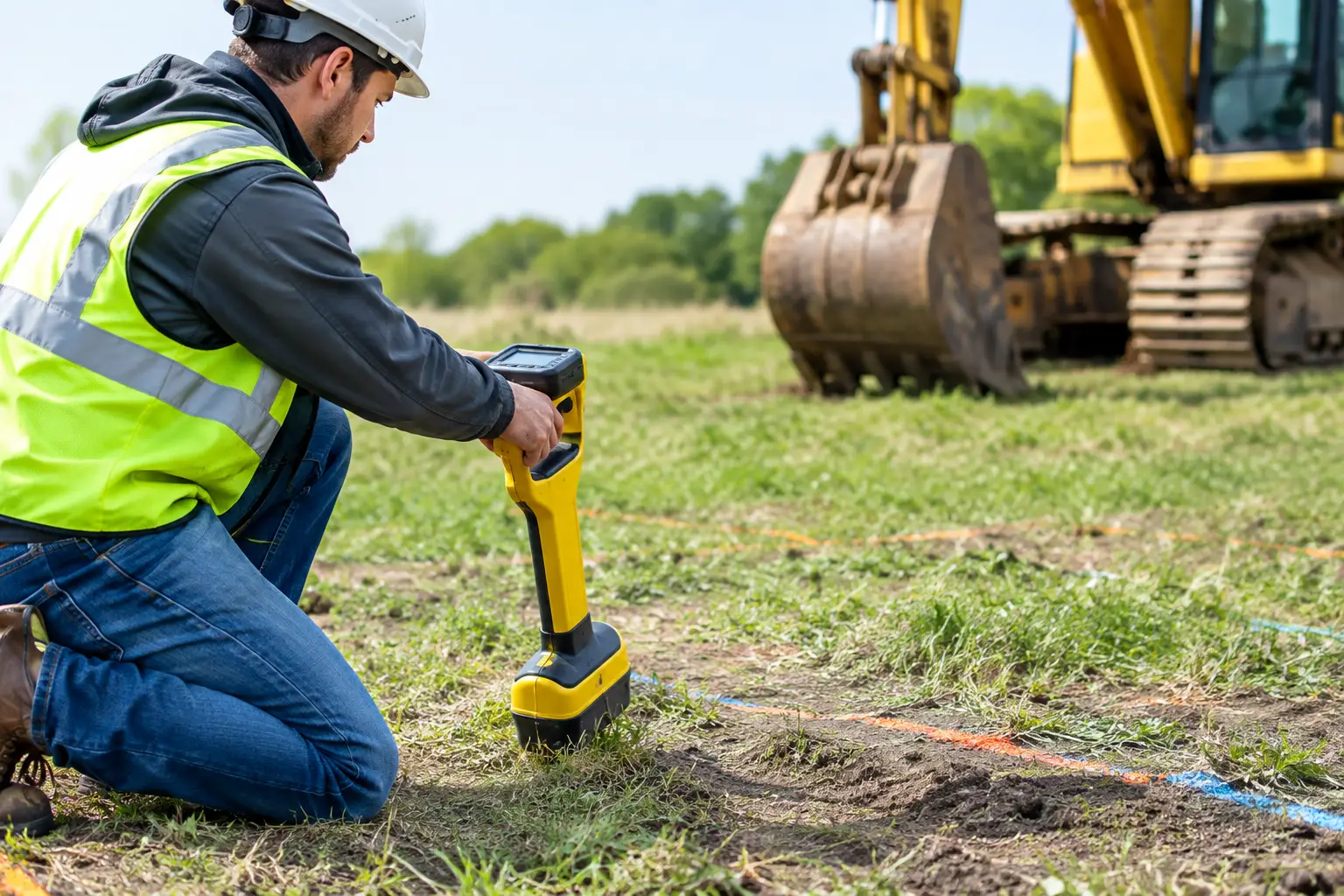
A bobcat bucket can turn a straightforward repair into a far bigger problem in seconds. One strike on a concealed water line, gas pipe, sewer or electrical conduit can stop work, damage property and create a genuine safety risk. Pipe locating before excavation gives you a clearer picture of what sits below ground, so digging can be planned with care rather than guesswork.
For Sydney homes, strata properties and commercial sites, this step is particularly valuable. Older blocks often have altered drainage runs, unrecorded repairs or private services that do not follow the neatest path from the street. Before soil is moved, the right investigation protects the site, the schedule and the people working on it.
What pipe locating before excavation involves
Pipe locating is the process of tracing underground services and identifying their likely position before any excavation begins. The method depends on the service, the site conditions and the reason for digging. A plumber may combine utility information with on-site testing, electronic locating equipment, CCTV drain inspection and careful physical verification.
The aim is not simply to put a few paint marks on the lawn. It is to establish which pipes are present, where they run, what they serve and where uncertainty remains. That detail helps determine whether excavation is safe, where it should begin and whether hand digging is needed near a marked service.
A professional approach also recognises the limits of any locating method. Ground movement, renovations, old plans and non-metallic pipework can make a service harder to trace. Marks are a guide, not permission to dig aggressively. Where the consequence of a strike is high, the exposed location of the pipe should be visually confirmed before machinery works close to it.
Why plans alone are not enough
Before excavation, it is sensible to obtain available utility plans through the appropriate service information process. These plans can identify public assets and give contractors a useful starting point. They do not necessarily show every pipe within a private property.
That distinction matters. A home may have a private water main running from the meter to the house, drainage to a granny flat, irrigation lines, pool plumbing, old earthenware sewer sections or gas pipework installed during a previous renovation. Commercial and strata sites can be more complex again, with multiple tenancies, grease waste, fire services and undocumented alterations.
Plans may also show an approximate corridor rather than the exact depth and position of a service. Treating them as a final excavation map is a shortcut that can be expensive. On-site locating turns background information into a practical excavation plan.
How plumbers locate concealed pipes
Different pipes respond to different technologies. The best method is chosen after considering the material, accessibility and the outcome needed.
Electronic tracing
Metal pipes and conductive cables can often be traced with an electromagnetic locator. A signal may be applied directly to an accessible pipe or cable, then followed above ground with a receiver. This can help trace a route across a yard, driveway or building site.
It is effective in many situations, but it has limitations. Congested underground services, reinforced concrete, nearby metalwork and changes in pipe depth can affect accuracy. An experienced operator reads the site rather than relying on a single signal reading.
CCTV drain inspection and sondes
For sewer and stormwater drainage, a CCTV camera is often one of the most useful diagnostic tools. The camera travels through the pipe and shows its condition from the inside. If the camera head has a sonde, or transmitting probe, its location can be detected from the surface.
This is particularly helpful when locating a blockage, damaged junction, collapsed section or connection point before targeted excavation. Instead of lifting an entire path or garden bed, the team can narrow the dig to the section that needs attention. The footage also confirms whether the problem is tree roots, cracked pipework, a displaced joint or another issue altogether.
Ground-penetrating radar and careful verification
Ground-penetrating radar can assist in some conditions, especially where there are unknown buried objects or non-conductive services. Its usefulness depends heavily on soil type, moisture, depth and surrounding materials. Sydney’s varying ground conditions mean it is not a one-size-fits-all answer.
Where a pipe needs to be excavated around or connected to, the final confirmation is often careful potholing or hand excavation. This exposes the service without the force of mechanical digging. It takes more time at the start, but it is a sensible trade-off when a gas line, electrical cable or critical water supply may be nearby.
When locating is worth the extra step
Pipe locating is a wise investment whenever excavation is planned near an existing building or service connection. It is especially worthwhile before installing a new bathroom drain, repairing a damaged sewer, building a retaining wall, adding a pool, replacing a water main or trenching for new gas and water lines.
It also makes sense when the symptoms suggest an underground fault. Recurrent drain blockages in the same area, unexplained wet patches, sinking paving, unusually high water bills and sewer odours can all point to a concealed issue. Digging based on assumptions can mean repairing the wrong section, then paying to restore the site twice.
For commercial properties and strata sites, locating helps protect operations as well as infrastructure. A damaged line can affect tenants, customers, access routes and trading hours. Confirming services before works begin supports a cleaner programme, clearer communication and fewer unwelcome surprises on site.
The risks of excavating without locating
The immediate risk is physical damage. A broken water pipe can flood an excavation, undermine nearby soil and interrupt supply. Damaging a sewer can create a hygiene issue and contaminate the work area. A gas strike requires urgent safety action, while contact with electrical infrastructure can be life-threatening.
The costs extend beyond the repair itself. There may be emergency call-outs, investigation, reinstatement of paving or landscaping, delayed trades, insurance complications and disruption to occupants. If a new pipe has been installed over an older unlocated service, the repair can become more involved than it ever needed to be.
There is also a workmanship issue. Excavation should be precise. A targeted repair preserves more of the property, reduces mess and makes it easier to reinstate the area neatly. That is better for a landscaped family yard, a tiled courtyard and a busy commercial forecourt alike.
A practical process for safer digging
Start by defining the work clearly. Is the aim to repair a known leak, clear and repair a blocked drain, run a new service or investigate an unknown fault? The answer determines which information and equipment are needed.
Next, gather service plans and site history where available. Previous renovation drawings, photos, invoices and CCTV footage can all be useful. Let the plumber know about pool equipment, irrigation, detached studios, old septic systems, extensions and any past drainage work. Small details often explain why a pipe is not where someone expects it to be.
The site should then be inspected and located using methods suited to the pipework. Marked areas need to be treated as controlled zones, with excavation methods adjusted accordingly. If the pipe needs to be accessed, expose it carefully before bringing machinery closer.
Finally, document what has been found. Photos, measurements and CCTV recordings can make future maintenance simpler, particularly for strata managers, property investors and homeowners planning further improvements. Knowing where your services run is valuable long after the immediate job is complete.
Choosing the right team for the job
The right contractor will explain what can be located, what cannot be guaranteed and how they will manage uncertainty. Be wary of anyone who promises exact results without assessing the site, or who recommends broad excavation before investigating the fault.
Look for a licensed, insured plumber who can diagnose the issue as well as repair it. If drainage is involved, CCTV capability and a clear explanation of the footage are useful. If other services may be present, the team should know when to coordinate with the relevant specialist or asset owner rather than taking risks outside their scope.
At Pioneer Plumbing Co., the focus is on getting to the root of the problem before the ground is opened up. That means clear advice, clean work practices and a repair plan that respects your property and your time.
Before the first shovel goes in, ask for the location work to be explained in plain English. A little certainty below ground is often what keeps the rest of the project moving smoothly above it.