
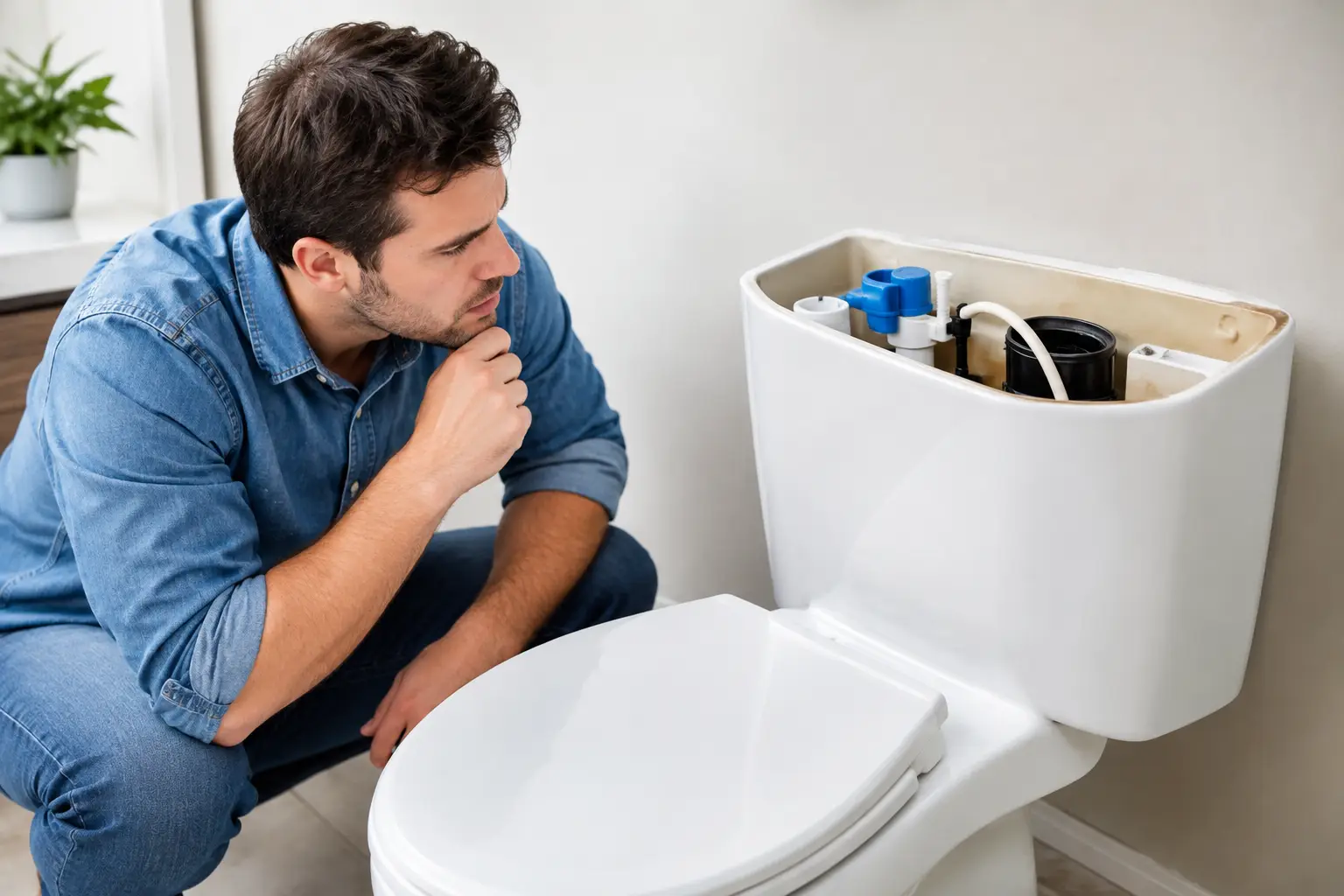
That faint refill sound after a flush is easy to ignore. But if you are asking, “why is toilet constantly running”, your toilet is likely wasting water around the clock - and the fault will rarely fix itself. A running toilet can quietly add to your water bill, disturb a good night’s sleep and, in some cases, point to worn internal parts that are overdue for attention.
The good news is that most running toilets have a straightforward cause. The key is identifying whether water is escaping from the cistern into the bowl, or whether the cistern is overfilling and sending water down the overflow. These are different faults, and they need different repairs.
Why is a toilet constantly running after it flushes?
Inside the cistern, a small set of components controls every flush. The inlet valve refills the tank, the outlet valve releases water into the bowl, and the flush button or handle activates the process. When one part no longer seals, shuts off or returns to position properly, water keeps moving.
On modern dual-flush toilets, the most common issue is a worn outlet valve seal. This rubber seal sits at the base of the cistern and should close firmly once flushing is complete. Over time, it can harden, split, distort or collect grit. Water then seeps slowly into the bowl, the water level drops, and the inlet valve repeatedly refills the cistern.
You may not see a dramatic flow. Sometimes the only clue is a faint trickle down the back of the toilet bowl, a hiss from the cistern every few minutes, or ripples on otherwise still bowl water. Left alone, that small leak can waste a surprising amount of water.
The inlet valve is not shutting off
If water is running into the overflow tube inside the cistern, the inlet valve is usually the problem. Also called a fill valve, this part is designed to stop the water supply when the cistern reaches its set level. A worn diaphragm, sticking float or incorrect adjustment can stop it from closing properly.
Lift the cistern lid carefully and look inside while the toilet refills. If the water rises above the overflow height or keeps feeding into the overflow tube, the cistern is overfilling. This needs attention even if water is not spilling onto the floor. The overflow directs excess water safely into the bowl, but it does not stop the waste.
In some older cisterns, a float arm can catch on the side of the tank or become waterlogged. In newer units, the internal valve may be clogged by sediment or simply at the end of its service life. Replacing the correct valve is usually more reliable than trying to force a tired component back into service.
The outlet valve seal is leaking into the bowl
When the cistern water level is normal but keeps dropping after the inlet valve stops, suspect the outlet valve seal. This is particularly common in toilets that have been in service for years, as well as units exposed to mineral deposits or cleaning products that damage rubber components.
A simple dye test can help confirm it. Add a few drops of food colouring to the cistern water and do not flush the toilet for 15 to 20 minutes. If colour appears in the bowl, water is passing through the outlet valve. Do not use harsh dyes or cleaners for this test, as they can stain surfaces or damage internal parts.
The repair may involve replacing the seal, the outlet valve washer or the entire outlet valve assembly. The right choice depends on the cistern model and the condition of the mechanism. An experienced plumber will check the sealing surface as well, because a new seal will not perform properly against a damaged or dirty seat.
The flush button or mechanism is sticking
A dual-flush button that sits low, catches or feels unusually stiff can hold the outlet valve slightly open. The same can happen with worn cables, incorrectly adjusted rods or a flush mechanism that has shifted inside the cistern.
This fault is often intermittent. The toilet may work normally most of the time, then run after a particular flush. If pressing the button again stops the water, do not assume the problem is solved. The mechanism still needs adjustment or replacement before it becomes a constant leak.
What you can check safely before calling a plumber
Homeowners can carry out a few basic checks without dismantling the toilet. Start by listening. Is the sound coming from the cistern as it refills, or can you see water moving inside the bowl? Then remove the cistern lid, place it on a towel or stable surface, and observe one complete flush cycle.
Check whether the water level rises into the overflow tube. If it does, the inlet valve is likely at fault. If the inlet valve stops but later starts again without anyone flushing, water is probably leaking through the outlet valve seal.
You can also check that the isolation valve, usually located on the wall near the toilet, turns freely. In an urgent situation, turning this valve clockwise can stop water entering the cistern while you arrange a repair. Avoid overtightening it, especially on older fittings. If the valve is seized, leaking or difficult to reach, leave it alone and call a licensed plumber.
Do not use makeshift weights, tape or improvised parts inside the cistern. They may quieten the noise temporarily, but they can interfere with the flush, damage the mechanism or create a larger leak. A toilet should flush efficiently, refill to the correct level and then remain completely quiet.
When a running toilet needs professional repair
A constantly running toilet is usually not a major emergency, but it should be repaired promptly. Call a plumber sooner if the toilet will not stop filling, the isolation valve does not work, water is leaking from beneath the cistern, or the cistern is concealed behind a wall panel. Concealed cisterns need careful diagnosis to avoid unnecessary damage to tiles, cabinetry or access panels.
Professional repair also makes sense when the toilet has been repaired before and the fault keeps returning. Repeated seal changes can mask a worn outlet assembly, poor adjustment, incorrect replacement parts or debris in the valve. Getting to the root of the problem is the better long-term fix.
For strata properties, rental homes and commercial bathrooms, a running toilet should be treated as a maintenance priority. High-use toilets wear faster, and a fault can become inconvenient quickly if a cistern stops flushing altogether. A plumber can also assess whether matching parts are still available or whether an upgrade is the more sensible option.
How a plumber fixes a constantly running toilet
A proper repair begins with confirming where water is escaping. The plumber will inspect the inlet valve, outlet valve, overflow height, flush mechanism, isolation valve and cistern condition. From there, the repair may be as simple as fitting a new seal and cleaning the valve seat, or it may require a replacement inlet valve or full flush valve assembly.
The final step matters just as much as the part replacement. The cistern should be tested through several flushes, checked for quiet shut-off and inspected for leaks at every connection. On a premium repair, the work area is left clean and you are told exactly what failed, what was replaced and how to spot any future issue.
Pioneer Plumbing Co. approaches running toilet repairs the same way it handles every water leak: with clear diagnosis, transparent quoting and workmanship designed to last. One call, one text, sorted - without shortcuts or guesswork.
A toilet that keeps running is asking for attention, even when the sound is barely noticeable. Turn off the isolation valve if needed, avoid temporary fixes, and arrange a proper inspection before a small internal fault becomes an ongoing water bill.