
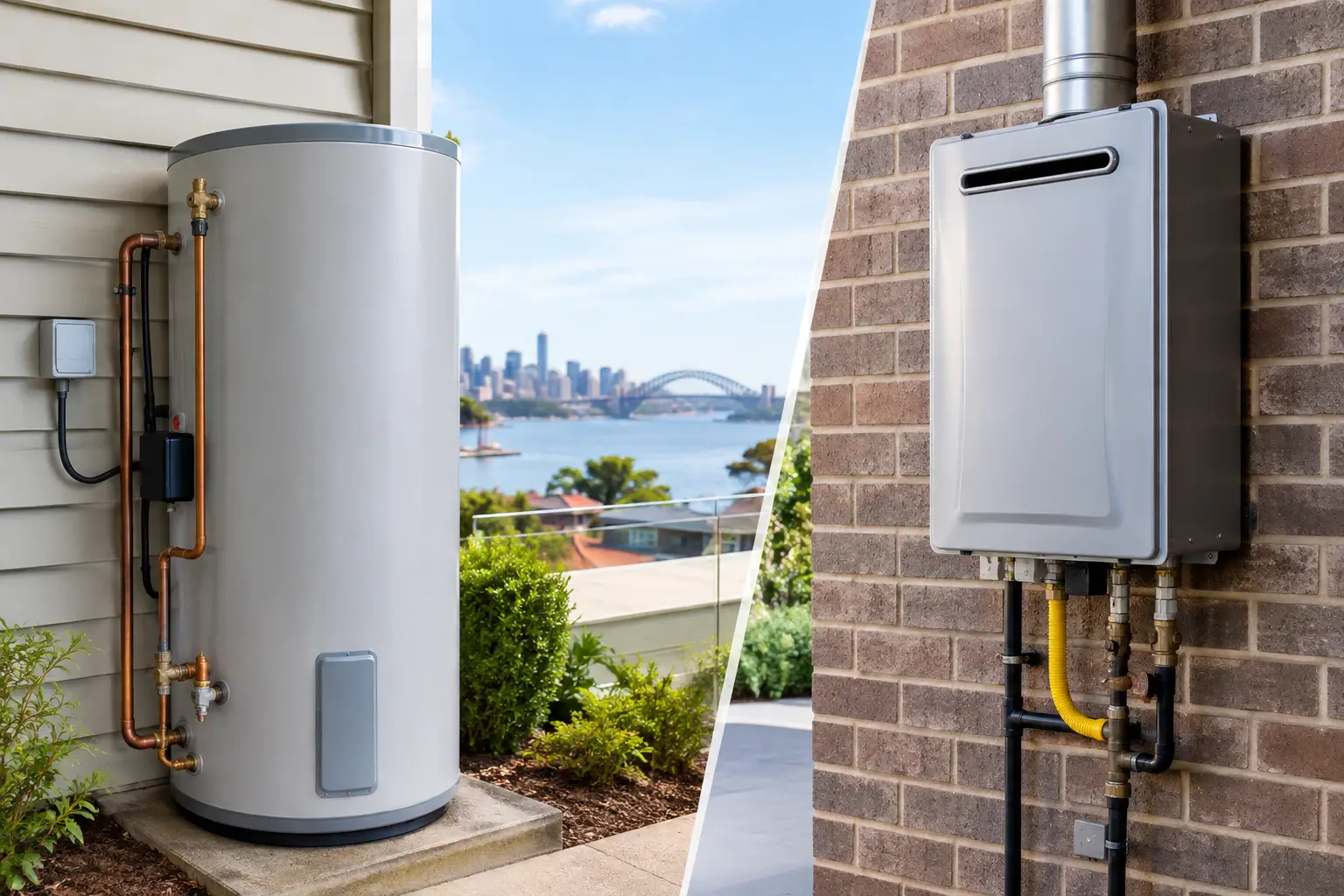
A failed hot-water system rarely gives a household much warning. One minute the morning routine is running normally; the next, there is a cold shower, a leaking tank or no hot water for a full house. When replacement is needed, the electric versus gas hot water decision affects more than the upfront quote. It shapes your running costs, available hot water, installation work and future flexibility.
For Sydney homes, there is no single winner. The right system depends on how many people use hot water, whether natural gas is already connected, where the unit will sit, and how the property uses energy. A good replacement starts with those details, not a one-size-fits-all recommendation.
Electric versus gas hot water: the key difference
The most practical difference is how each system heats water and how quickly it can meet demand. Conventional electric storage systems heat a tank of water using an electric element. The heated water is stored until you turn on a tap, shower or appliance. Once the tank is depleted, the system needs time to heat more water.
Gas systems may be storage units or continuous-flow units. A gas storage heater works much like an electric tank, but uses a gas burner. A continuous-flow gas heater heats water as it passes through the unit, so it does not store a tankful of hot water. Provided the system is correctly sized, it can keep supplying hot water while the gas and water are flowing.
That makes continuous-flow gas attractive for busy family homes with back-to-back showers. Electric storage can still be an excellent choice for smaller households, properties with modest hot-water demand, or homes planning to make greater use of solar power.
Upfront cost is only part of the picture
A like-for-like electric storage replacement is often the simplest and most affordable installation. If the property already has the right electrical circuit and an existing tank in place, the work can be straightforward. This can make electric storage a sensible solution when a failed unit needs replacing promptly and the household's demand is predictable.
Gas hot-water installations can involve more variables. A new gas system may need compliant gas pipework, isolation valves, ventilation clearances, a flue arrangement or a suitable external wall location. If a property does not already have natural gas connected, the cost and practicality of adding it can change the equation considerably.
Continuous-flow units also need careful sizing. Selecting a model based only on the number of bathrooms can lead to disappointment. The plumber should consider the number of outlets likely to run at once, incoming water temperature, fixture flow rates and household habits. A premium showerhead and a high-flow bath filler can place very different demands on the same system.
The cheapest unit on the day is not always the best value over its service life. A properly sized, compliant installation helps avoid poor water pressure, temperature fluctuations and expensive alterations later.
Running costs depend on your tariffs and habits
Electricity and gas prices vary by retailer, tariff and location, so running costs should be assessed against your own bills rather than broad claims. Electric storage systems are often connected to an off-peak or controlled-load tariff, allowing the tank to heat at a lower rate during set periods. That can reduce costs, but it also means the tank must be large enough to carry the household through peak use.
If everyone showers in the evening, a controlled-load tank may need a larger capacity than expected. If the stored hot water is used up, there may be a wait before it recovers. Some systems use a daytime boost, but that may be charged at a higher tariff.
Gas continuous-flow systems generally heat water only when it is needed. This avoids the standby heat loss associated with a storage tank and suits inconsistent or high demand. However, gas prices and daily supply charges matter. For a home that uses gas only for hot water, retaining a gas connection may not represent the best overall value.
Homes with rooftop solar deserve a closer look at electric options. A conventional electric tank can be scheduled to heat during the middle of the day, using more of the solar energy generated on site. Heat-pump hot-water systems are another electric option worth considering. They use electricity to move heat from the surrounding air rather than generating all heat through an element, which can significantly reduce energy use. They are not right for every site, though, as location, noise, drainage and installation cost all need proper consideration.
Hot-water capacity and recovery matter at busy times
A storage tank has a clear limit: once its usable hot water is drawn down, recovery takes time. This is not necessarily a problem. A correctly sized electric storage system can comfortably serve a household with regular patterns. The issue arises when capacity is undersized or demand changes after renovations, extra residents or the addition of another bathroom.
Gas continuous flow is often the stronger option where several people shower one after another, guests regularly stay over, or a large family has unpredictable routines. It offers an ongoing supply rather than a fixed tank volume. There is still a limit, however. If multiple outlets are running at once, an undersized unit can struggle to maintain temperature and flow.
A practical assessment should look beyond bedroom numbers. Ask who uses hot water at the same time, whether the washing machine runs on hot water, how often the bath is used, and whether the property has water-saving fixtures. These details make the difference between a system that merely works and one that works well every day.
Space, appearance and installation conditions
Electric storage systems need room for a tank. They can be installed internally or externally, subject to suitable drainage, safe access and the manufacturer’s clearances. A leaking tank should never be left sitting where it can damage flooring, cabinetry or stored belongings. Safe tray and drain arrangements are particularly important for units located inside cupboards or elevated areas.
Continuous-flow gas units are compact and typically wall-mounted outside. They can free up valuable cupboard or laundry space, which is useful in apartments, townhouses and renovations. Their location still matters. Clearances, access for servicing, condensate management where relevant, and separation from windows or vents must all meet current requirements.
For strata and commercial properties, installation planning can be more involved. External appearance, common-property approvals, gas capacity, plant-room access and shutdown timing may all need to be managed before the job starts. This is where clear scoping prevents surprises for occupants and building managers.
When electric is the better fit
Electric hot water is often the right answer when the home already has an electric storage system, there is no useful gas connection, and the household has stable demand. It also makes sense where solar generation can be used to heat water during the day, or where a heat pump is suitable for the site and budget.
Electric storage is familiar, proven and relatively simple. For a unit or compact home with one or two residents, it can provide dependable hot water without the added complexity of gas pipework. The key is selecting adequate capacity and understanding when the system reheats.
When gas is the better fit
Gas can be a strong choice for larger households, homes with regular simultaneous shower use, and properties where natural gas is already connected for cooking or heating. Continuous-flow gas is especially useful when space is limited and an endless supply of hot water is more valuable than stored capacity.
It can also suit renovations where removing a bulky tank improves the layout. But gas is not automatically cheaper or better. The existing pipework must be assessed, the system must be correctly sized, and the property needs a compliant location for the appliance.
Replacement is the right time to fix the underlying issue
If your current system has failed early, leaked repeatedly or never supplied enough hot water, replacing it with the same type and size may repeat the problem. A proper inspection should check the condition of valves, pipework, pressure-limiting devices, safe trays, drainage and the hot-water system’s location. Water pressure, tempering requirements and gas line capacity can all affect performance and compliance.
At Pioneer Plumbing Co., the focus is on getting to the root of the problem rather than fitting a quick patch. That means explaining the viable options in plain English, providing transparent pricing and leaving the site clean when the work is complete.
Before choosing, take stock of how your household actually uses hot water, what energy services are already available and whether the property is likely to change in the next few years. The best system is the one that delivers reliable hot water without demanding constant thought from the people living or working there. Every drop and every detail should be accounted for.