
A gas leak is not a job to investigate with a match, a lighter or a bit of guesswork. Knowing how to check gas leaks starts with recognising the warning signs, protecting everyone on site and knowing when to stop. For Sydney homes, strata properties and commercial premises, the safest outcome is always a prompt assessment by a licensed gas fitter.
Know the signs of a possible gas leak
Natural gas has no smell in its original state, so a distinctive sulphur-like odour is added to help people detect it. Many describe it as rotten eggs, but any unfamiliar gas-like smell around an appliance, gas meter, pipework or LPG bottle deserves attention.
Odour is not the only sign. You may notice a gas cooktop flame that is yellow, orange or sooty rather than mainly blue. Pilot lights that repeatedly go out, black marks around an appliance, hissing near a gas connection, or a gas bill that rises without an obvious change in use can also point to a fault. Outdoors, an unexplained patch of dead or discoloured vegetation near buried gas pipework may warrant investigation.
These symptoms do not prove there is a leak. A yellow flame, for example, can be caused by poor burner cleaning or inadequate air supply. That is precisely why a proper diagnosis matters. The proof is in the pipework and the testing, not assumptions.
What to do if you smell gas indoors
Treat a strong or persistent gas smell as an immediate safety issue. Do not try to locate the exact source first. Leave the building with everyone else, including pets, and move to a safe distance. Warn nearby occupants if you are in a townhouse, apartment block, shop or shared commercial site.
If it is safe to do so on your way out, extinguish any naked flames. Do not operate light switches, power points, exhaust fans, appliances, doorbells or garage remotes. Do not start a vehicle nearby. Even a small electrical spark can ignite accumulated gas.
Avoid using your mobile while inside the affected area. Once you are outside and clear of the property, call 000 if there is a fire, someone is unwell, or there is an immediate risk to people or property. Contact the relevant gas network emergency service as well, then arrange for a licensed gas fitter to inspect and repair the installation. Do not re-enter or turn the gas back on until it has been declared safe.
If you know where your gas isolation valve is and can reach it without entering a gas-affected space or taking risks, turning off the supply can be sensible. However, do not delay evacuation to find it. Your safety comes first.
How to check gas leaks when there is no strong odour
A mild, occasional smell or a concern raised during routine maintenance calls for a more measured approach. Start with a visual check only. Look for damaged flexible hoses, loose-looking connections, corrosion around exposed fittings, or signs that an appliance has been knocked or moved. Check that ventilation openings near gas appliances are not blocked by storage, paint or renovations.
For an LPG bottle, inspect the bottle, regulator and hose from a safe distance. Keep the cylinder upright, away from heat and clear of enclosed spaces. LPG is heavier than air, so it can settle in low areas such as drains, pits and garages. Natural gas generally rises, but it can still collect in roof spaces or poorly ventilated rooms. Neither should be treated casually.
Do not dismantle a connection, remove an appliance cover or tighten fittings yourself. Gas installation work must be completed by a licensed gas fitter, and a small adjustment made without the right tools or testing can create a bigger problem.
The soapy-water test: where it helps and where it does not
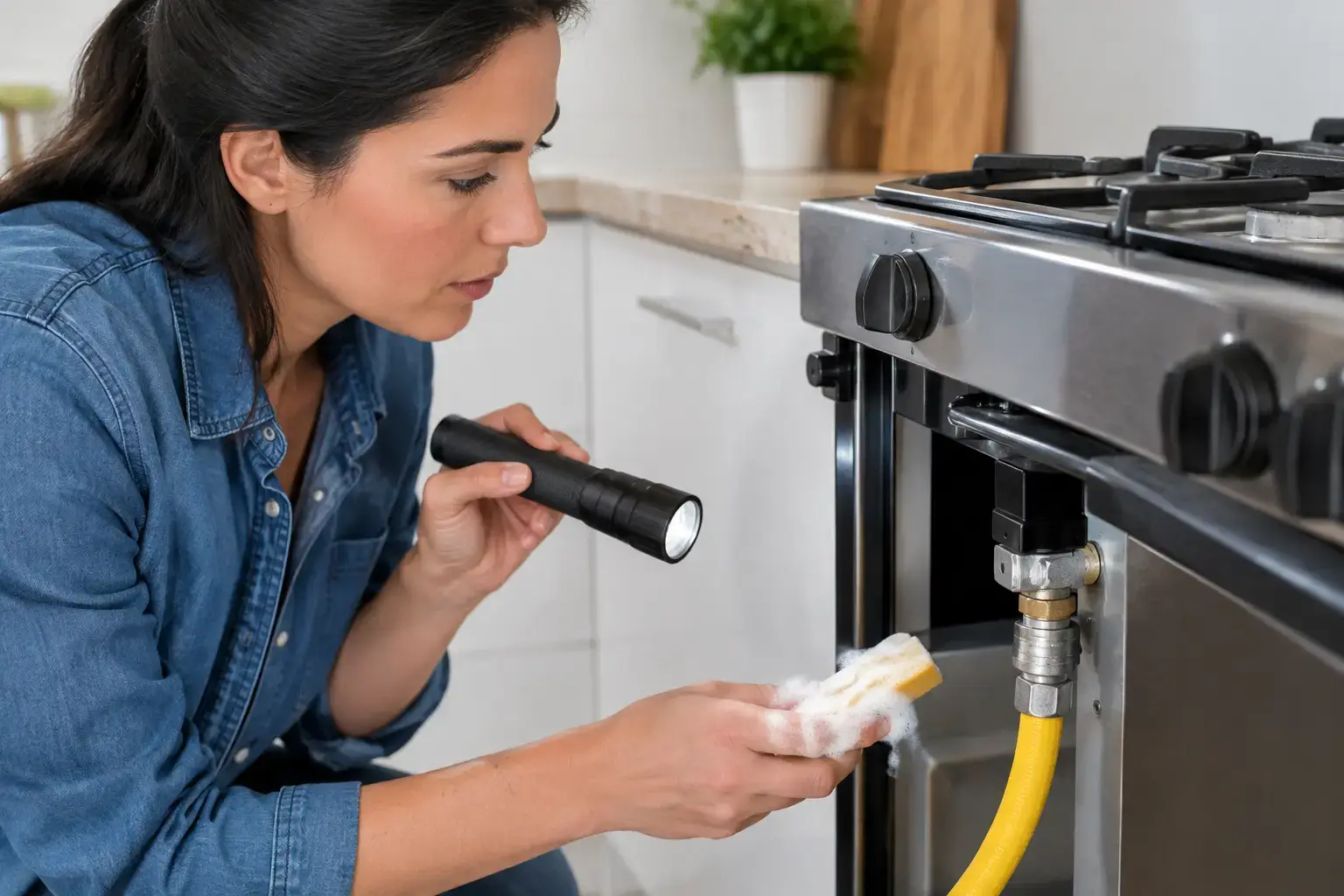
A soapy-water solution can reveal bubbles at an accessible, above-ground connection, such as an LPG cylinder valve or outdoor barbecue connection. It is only appropriate when there is no strong gas smell, no hissing, no immediate danger and no need to enter an enclosed space.
With the gas supply on, apply the solution to the external connection without using a flame. Growing bubbles can indicate escaping gas. If bubbles appear, turn off the gas supply if safe, keep people away from the area and call a licensed gas fitter. Wipe the solution away afterwards.
This is a limited check, not a certificate of safety. It cannot test concealed pipework, appliance internals, underground lines, regulator performance or a leak that only occurs under certain operating conditions. Never use this method on hot surfaces, indoor fittings you are unsure about, or any location where you can smell gas.
Why a licensed gas fitter tests differently
Professional gas leak detection is more than following an odour. A licensed gas fitter can isolate sections of the system, conduct pressure testing, inspect appliance connections and use calibrated electronic gas detection equipment to locate faults accurately. They can also check gas pressure, burner operation, ventilation, flueing and appliance combustion.
That broader inspection matters because the issue may not be a leak at all. A faulty regulator, deteriorated bayonet point, incomplete combustion or poor ventilation can affect safety and appliance performance. A quality repair addresses the root cause, then verifies the system is safe before it is returned to service.
For a property manager, strata committee or commercial operator, keep a record of reported gas odours, appliance faults, repairs and compliance work. Clear documentation protects occupants and makes recurring faults easier to trace. In tenanted properties, respond quickly rather than asking residents to keep testing an appliance themselves.
Check common gas leak locations carefully
Gas leaks tend to occur at connection points and in components that age, move or corrode. Pay particular attention after renovations, appliance replacements, landscaping works near gas lines, storm damage or a knock to an outdoor meter or LPG bottle.
In homes, common locations include the cooktop connection, oven, hot water system, heater, barbecue bayonet, outdoor kitchen and meter assembly. In commercial kitchens, there are often more appliances, longer pipe runs and higher usage, which makes planned inspections especially worthwhile. A loose connection behind a bench or under a cookline is not always obvious until the smell becomes noticeable.
Older properties can present additional variables. Pipework may have been altered over decades, appliances may be nearing end of life, and previous work may not meet current expectations. There is no benefit in a temporary patch if the system needs a properly scoped repair.
Prevent gas issues before they become urgent
Have gas appliances serviced at the intervals recommended by their manufacturer and arrange prompt repairs when a flame changes colour, an appliance cuts out or an unusual odour appears. Keep heaters and hot water systems accessible, with required ventilation clear. Do not store chemicals, boxes or garden equipment against equipment or pipework.
It also pays to show adults in the household where the main gas shut-off is located. In a workplace or strata building, make sure responsible staff know the emergency procedure and who to contact after hours. This is simple preparation, not alarmism.
Pioneer Plumbing Co. provides licensed gas fitting and fault diagnosis across Sydney's northern suburbs, with clear communication, clean work practices and repairs focused on long-term safety. Whether the concern is a faint smell near a cooktop or a failed commercial appliance, a timely inspection gives you certainty without shortcuts.
If something does not smell, sound or perform as it should, trust that instinct. Step away from immediate danger, keep ignition sources out of the picture and let qualified testing provide the answer. Every detail matters when gas is involved.