
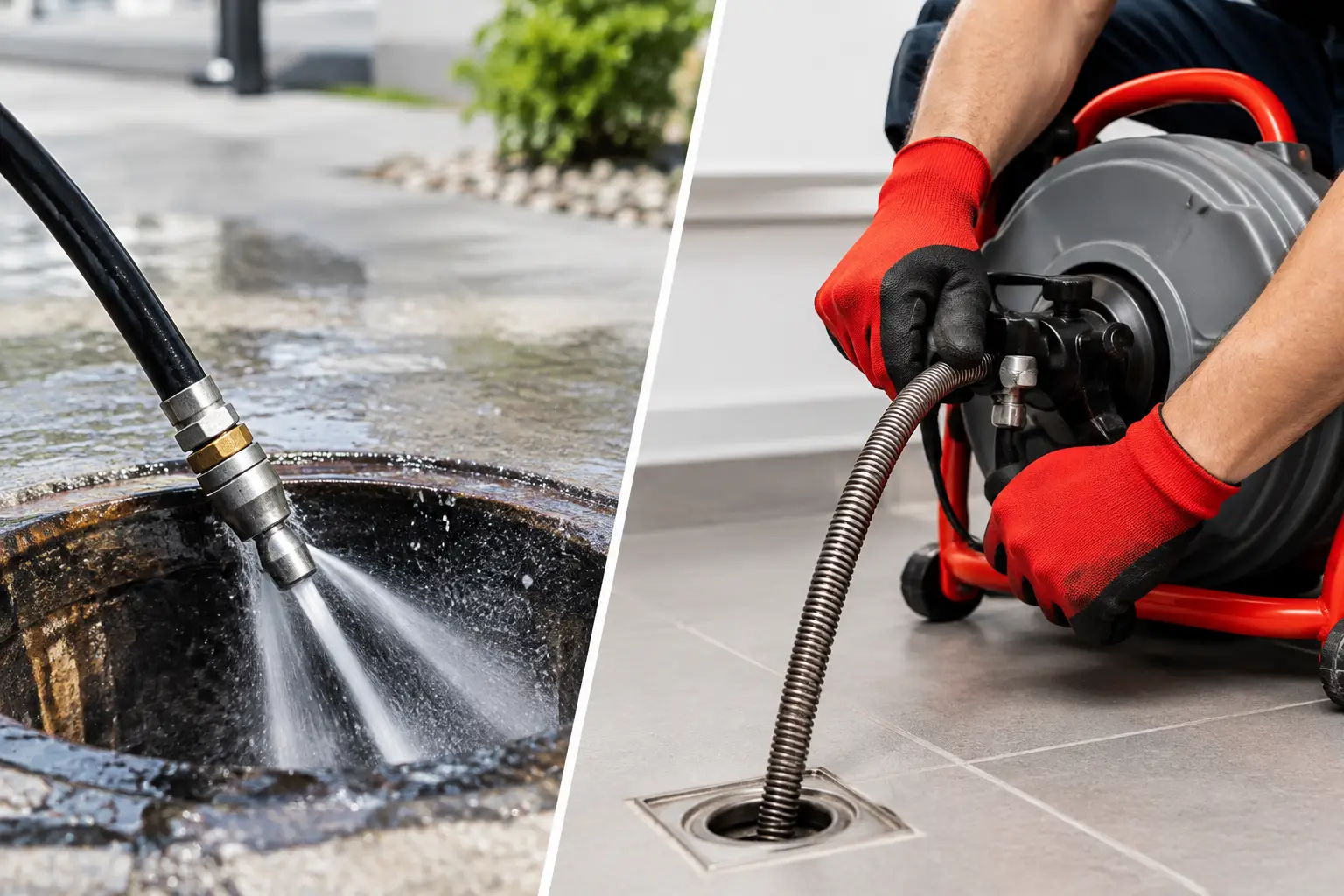
A blocked drain rarely picks a convenient time. One day the kitchen sink is slow; the next, water is pooling around a floor waste or the toilet is refusing to clear. When comparing hydro jetting versus drain snaking, the right answer comes down to what is inside the pipe, where the blockage sits and the condition of the drain itself.
Both methods have a place. Drain snaking can be a fast, effective way to break through a local obstruction. Hydro jetting is a more thorough cleaning method that uses high-pressure water to scour the internal walls of a pipe. Neither should be chosen as a one-size-fits-all fix. A proper diagnosis first can save repeat call-outs, unnecessary mess and money spent treating the symptom rather than the cause.
Hydro Jetting Versus Drain Snaking: The Core Difference
A drain snake, also called an electric eel or drain auger, uses a rotating cable with a cutting head or attachment. The plumber feeds the cable through the pipe until it reaches the blockage, then rotates it to cut, break apart or retrieve the material causing trouble. It is particularly useful for a concentrated blockage, such as a small mass of wipes, hair or roots at one point in the line.
Hydro jetting sends water through a specialised hose and nozzle at controlled high pressure. Forward jets help the hose travel through the drain, while rear-facing jets flush loosened debris back towards the access point. Rather than simply opening a channel through a blockage, hydro jetting can wash away grease, sludge, soap residue, scale and fine root growth along a longer section of pipe.
Think of snaking as targeted mechanical clearing. Hydro jetting is closer to a deep clean for a suitable drain line. The proof is in the pipework, which is why a CCTV drain inspection is often the sensible next step before or after either method.
When Drain Snaking Is the Better Option
Drain snaking is often the practical first choice when there is a clear, localised obstruction and the pipe needs immediate access. For example, a bathroom basin repeatedly slowed by hair and soap build-up may respond well to a cable machine. The same applies where tree roots have entered at a joint and need to be cut back before further cleaning can happen.
It can also be more appropriate for older or uncertain pipework. Sydney has plenty of established homes with ageing earthenware, cast iron or poorly repaired drainage lines. If a pipe is cracked, displaced or structurally compromised, high-pressure water may not be the first tool to use. A licensed plumber needs to assess what the line can safely handle.
The limitation is that a snake may clear a path without removing all of the build-up around it. Water starts flowing again, but grease or root fibres remain on the pipe wall. That can be perfectly acceptable for a simple, isolated clog. For a drain that blocks every few months, however, it can amount to a temporary patch rather than a lasting repair.
Common situations suited to snaking
A cable machine is commonly effective for a single blocked fixture, a recently dropped object that can be hooked or retrieved, or a compact root obstruction. It is also useful as part of the diagnostic process, especially when the plumber needs to establish the location and nature of a blockage before deciding whether further cleaning or repairs are needed.
When Hydro Jetting Makes More Sense
Hydro jetting comes into its own when the problem is widespread build-up rather than one solid plug. Kitchen waste lines are a good example. Cooking fats, food particles and detergent residue gradually coat the inside of the pipe. In a café, restaurant or commercial kitchen, this process can happen quickly. At home, it often shows up as a sink that drains slowly, unpleasant odours or recurring overflow at the external gully.
It is also highly effective for longer drain runs with repeated minor root ingress. A cutter may open the drain, while hydro jetting clears the finer roots and debris left behind. This helps restore better flow and gives CCTV footage a clearer view of the pipe condition afterwards.
For strata and commercial sites, hydro jetting can be valuable as planned maintenance. Shared waste lines take more use than a single household drain, and blockages can disrupt tenants, customers and daily operations. Cleaning a suitable line before it fails is generally less disruptive than responding to an after-hours overflow.
Hydro jetting is not automatically the strongest or best option simply because it is more powerful. Pressure must be selected for the pipe material, diameter and condition. A professional will avoid using it blindly on a fragile or damaged line. If inspection reveals collapsed sections, open joints or major root invasion, excavation, relining or targeted repairs may be the real solution.
Why a Camera Inspection Changes the Decision
A blocked drain is hidden underground or behind walls, so guesswork has limits. CCTV drain inspection lets the plumber see what is actually happening inside the pipe. It can identify grease build-up, root entry, cracked pipework, offsets, sags where waste collects, or an object lodged in the line.
That information determines whether drain snaking, hydro jetting or repair work is appropriate. It also helps verify the result. After clearing, a camera can confirm that flow has been restored and reveal whether there is a structural issue likely to cause another blockage.
This matters for property owners deciding whether to spend money on a recurring drain problem. A cheap clear-out may seem attractive until it becomes the third or fourth call-out for the same line. Transparent advice means explaining what has been found, what each option will achieve and where the long-term risk remains.
Cost, Speed and the Risk of Repeat Blockages
For a straightforward obstruction, drain snaking is often quicker and may cost less than a full jetting service. It can provide a prompt result when the priority is getting a toilet, basin or kitchen sink operational again.
Hydro jetting generally requires more specialised equipment and is often a larger upfront investment. Yet it can offer better value when residue covers a substantial length of pipe or when a drain has a history of repeat clogs. Clearing more of the internal build-up can extend the time between blockages, provided the pipe is otherwise sound.
The important distinction is between cleaning and repairing. Neither method can permanently fix a broken pipe, severe root entry through failed joints, or a drain installed with incorrect falls. A clean pipe with a structural defect is still a pipe that needs attention. Honest recommendations should make that clear.
What Not to Do Before Calling a Plumber
Avoid repeatedly pouring harsh chemical drain cleaners into a blocked line. They can damage some pipework, create fumes and make the area unsafe for anyone working on the drain. They also rarely resolve a serious blockage caused by roots, wipes or physical damage.
Do not keep flushing a toilet that is rising towards the rim, either. Turn off the water at the isolation valve if safe to do so, keep people away from any overflow and avoid running taps or appliances that discharge into the same drainage system. For a kitchen blockage, stop using the dishwasher and washing machine until the line has been assessed.
If you can, note where the issue appears. Is it one fixture, several fixtures, or an outside gully? That small detail helps narrow down whether the blockage is local to a branch line or further along the main sewer drain.
Choosing the Right Clearing Method for Your Property
Hydro jetting versus drain snaking is not a contest with one permanent winner. Snaking is precise and effective for certain obstructions. Hydro jetting is exceptionally useful for thorough cleaning and recurring build-up in sound pipework. The best method follows a clear assessment, not a guess made at the surface.
For Sydney homes, strata properties and commercial sites, the standard should be simple: arrive on time, identify the cause, explain the options in plain English and leave the area clean once the work is complete. If a drain keeps demanding attention, ask for the evidence inside the pipe. A camera inspection and the right clearing method can turn a frustrating repeat problem into a properly managed repair.