
A cracked sewer line under a landscaped garden or a blocked drain beneath a tiled bathroom can leave property owners facing a big decision. Pipe relining versus replacement is not simply a choice between two repair methods. It is a decision about access, long-term reliability, disruption to your home or site, and whether the underlying cause has been properly identified.
For Sydney homes, especially established properties with mature trees, ageing earthenware pipes or drainage running under driveways, relining can be an excellent option. In other cases, excavation and replacement is the more responsible repair. The right answer starts with a clear diagnosis, not a quick sales pitch.
Pipe relining versus replacement: the key difference
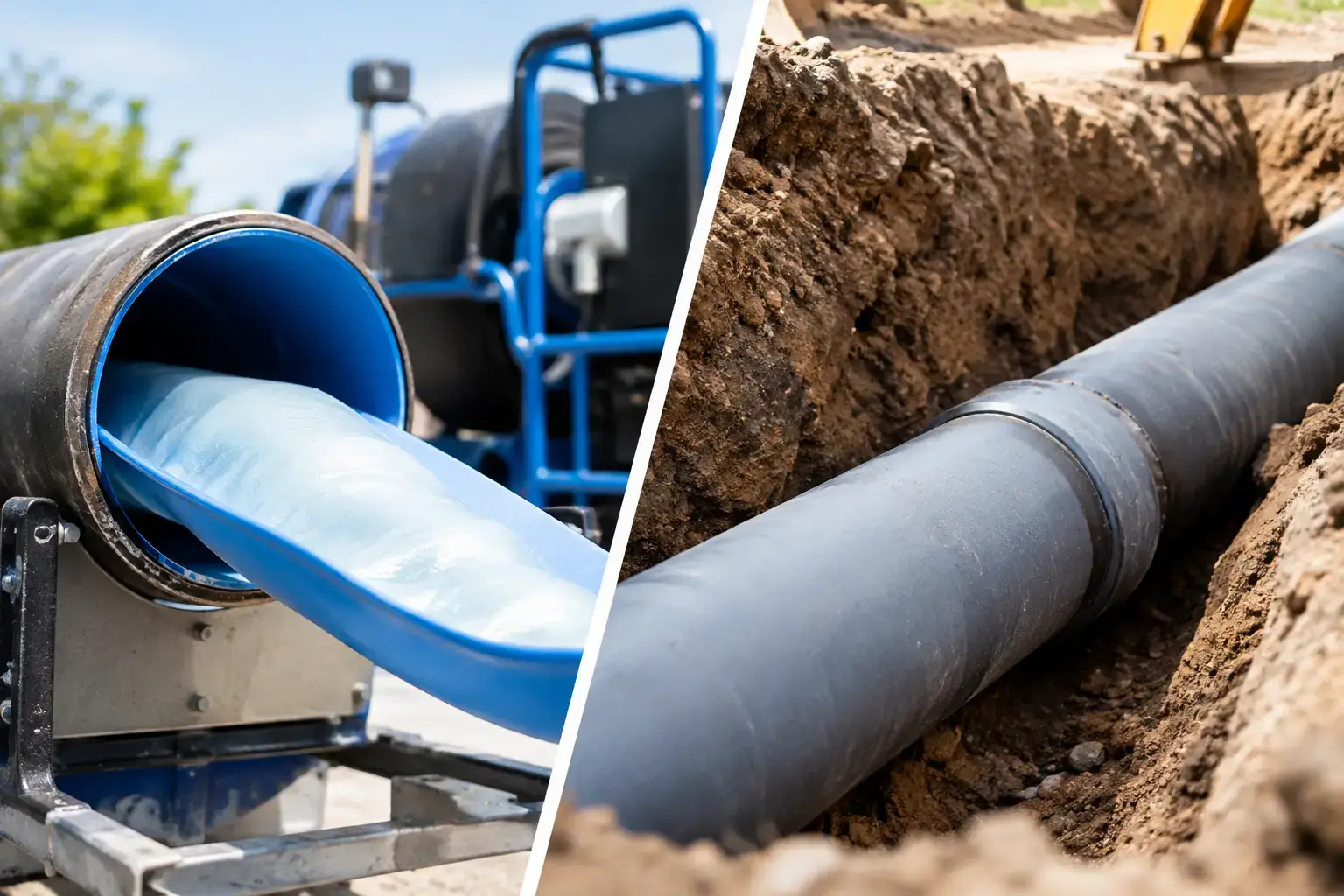
Pipe relining repairs a damaged pipe from the inside. After the drain is cleaned and inspected with a CCTV camera, a resin-saturated liner is inserted into the existing pipe and cured in place. The liner forms a new, jointless pipe within the old one, sealing cracks, small breaks, displaced joints and points where tree roots have entered.
Pipe replacement involves excavating to expose the faulty section, removing the old pipe and installing new drainage pipework. Depending on the location, this may mean lifting pavers, cutting concrete, digging through gardens or opening floors. Once installed, the new pipe is tested, connected and the excavation area is reinstated.
Both methods can deliver a durable outcome. The real question is whether the existing pipe provides a sound pathway for a liner, or whether its condition and position call for a new pipe altogether.
When pipe relining is the smarter repair
Relining is often well suited to pipes with localised damage but an overall usable structure. Tree root intrusion is one of the most common examples. Roots seek moisture through fine cracks and pipe joints, then expand inside the line, catching paper and waste until blockages become frequent. After thorough clearing, relining can seal the pipe and remove the entry points roots rely on.
It can also be a strong solution where excavation would cause unnecessary damage. A drain might run below a concrete driveway, a renovated bathroom, timber flooring or established landscaping. Rather than pulling apart finished areas to reach the pipe, relining can usually be completed through an existing access point or carefully created entry point.
For strata and commercial properties, the reduced disruption can be just as valuable as the repair itself. Less excavation may mean less noise, less mess, fewer access restrictions and less downtime for residents, customers or tenants. It is particularly useful where a failed drain sits beneath common areas or high-traffic surfaces.
Relining does have limits. The pipe must be thoroughly cleaned, and CCTV inspection needs to confirm that it has enough structural integrity and a suitable path for the liner. A pipe that has collapsed, flattened, severely misaligned or lost too much of its grade may not be a good candidate.
What relining does well
A properly specified relining repair creates a smooth internal surface with no joints for roots to enter. It can address several damaged sections in one run and usually avoids major excavation. It also preserves surrounding finishes, which can make a significant difference to the total project cost where concrete, tiles or landscaping would otherwise need rebuilding.
The trade-off is that relining is a specialist repair, not a universal cure. It must be designed around accurate measurements, pipe condition, bends and branches. Attempting to line a pipe without first clearing it fully and checking the footage is a shortcut that can create more problems than it solves.
When replacement is the better long-term option
Replacement is generally the better choice when the pipe has failed beyond what a liner can reliably repair. This includes significant collapse, severe bellies where waste and water continually sit in the line, extensive misalignment, or sections that are too fractured to form a stable host pipe.
It may also be necessary when the drainage layout itself is wrong. If a pipe has insufficient fall, repeatedly holds waste, or has been installed with poor connections, lining the inside will not correct the design issue. Excavation allows the pipework to be regraded, rerouted or upgraded to suit current requirements.
Replacement can be the most sensible option for accessible pipes, too. If the damaged section runs through an open garden bed with straightforward access, digging and installing a new section may be more economical than relining. The decision should consider the full scope: locating the fault, accessing it, repairing it, testing it and restoring the area afterwards.
What replacement does well
New pipework gives your plumber direct access to every part of the repair. It makes it possible to correct pipe fall, replace failed junctions, remove unsuitable materials and confirm that connections are properly made. Where a line has widespread deterioration, replacement can provide greater certainty than trying to preserve a pipe that has reached the end of its serviceable life.
The obvious downside is disruption. Excavation can affect lawns, gardens, driveways, paths and internal finishes. It also requires careful planning around underground services, site access and restoration. A premium plumbing team should explain these impacts before work begins, keep the work area tidy and make sure the completed repair is tested rather than assumed to be sound.
Cost is about more than the repair method
It is tempting to ask which option is cheaper. The honest answer is that it depends on the pipe condition and, most importantly, where it sits.
Relining may carry a higher specialist cost per metre than a straightforward replacement. However, it can be far better value when it prevents the removal and rebuilding of expensive surfaces. A pipe beneath a paved courtyard or polished concrete slab is a very different job from one running beside a fence in bare soil.
Replacement may be less expensive for a short, accessible section of pipe. But the quote needs to account for excavation, spoil removal, materials, labour, backfilling, compaction, testing and reinstatement. If a price appears unusually low, ask what has been allowed for restoring the affected area and whether CCTV evidence has confirmed the actual fault.
Transparent flat-rate quoting matters here. You should know what work is included, what could change if hidden conditions are found, and whether the proposed repair addresses the cause of recurring blockages rather than just clearing today’s obstruction.
Start with CCTV, not guesswork
The best decision is made after a professional drain investigation. CCTV drain inspection shows the exact location and nature of the fault, whether it is roots, cracks, a collapsed pipe, a displaced joint or a build-up restricting flow. It also reveals whether damage is isolated or spread across the line.
A capable plumber will combine the footage with drain cleaning and locating equipment where needed. This avoids digging based on assumptions and avoids relining a pipe that should be replaced. After the work, another camera inspection should verify that the line is clear, sealed and flowing as intended.
At Pioneer Plumbing Co., the focus is on getting to the root of the problem and explaining the practical options in plain English. That means recommending relining where it protects your property and makes sense, and recommending replacement when it is the repair that will genuinely last.
Signs you should arrange an inspection
Recurring blockages are the clearest warning sign, particularly when the same toilet, gully or drain backs up after it has been cleared. Slow drainage, gurgling fixtures, foul odours, wet patches in the yard and unusually lush sections of lawn can also point to a damaged underground line.
Do not wait for a complete sewer overflow before investigating. Early CCTV assessment may identify a small crack or root entry point while it is still suitable for a less invasive repair. For investment, strata and commercial properties, planned drain inspections can also help prevent disruptive failures during busy periods.
The best repair is the one that fits the pipe, the property and the future you expect from it. Ask for clear footage, a straightforward explanation and a repair plan that treats your home or site with the care it deserves.