
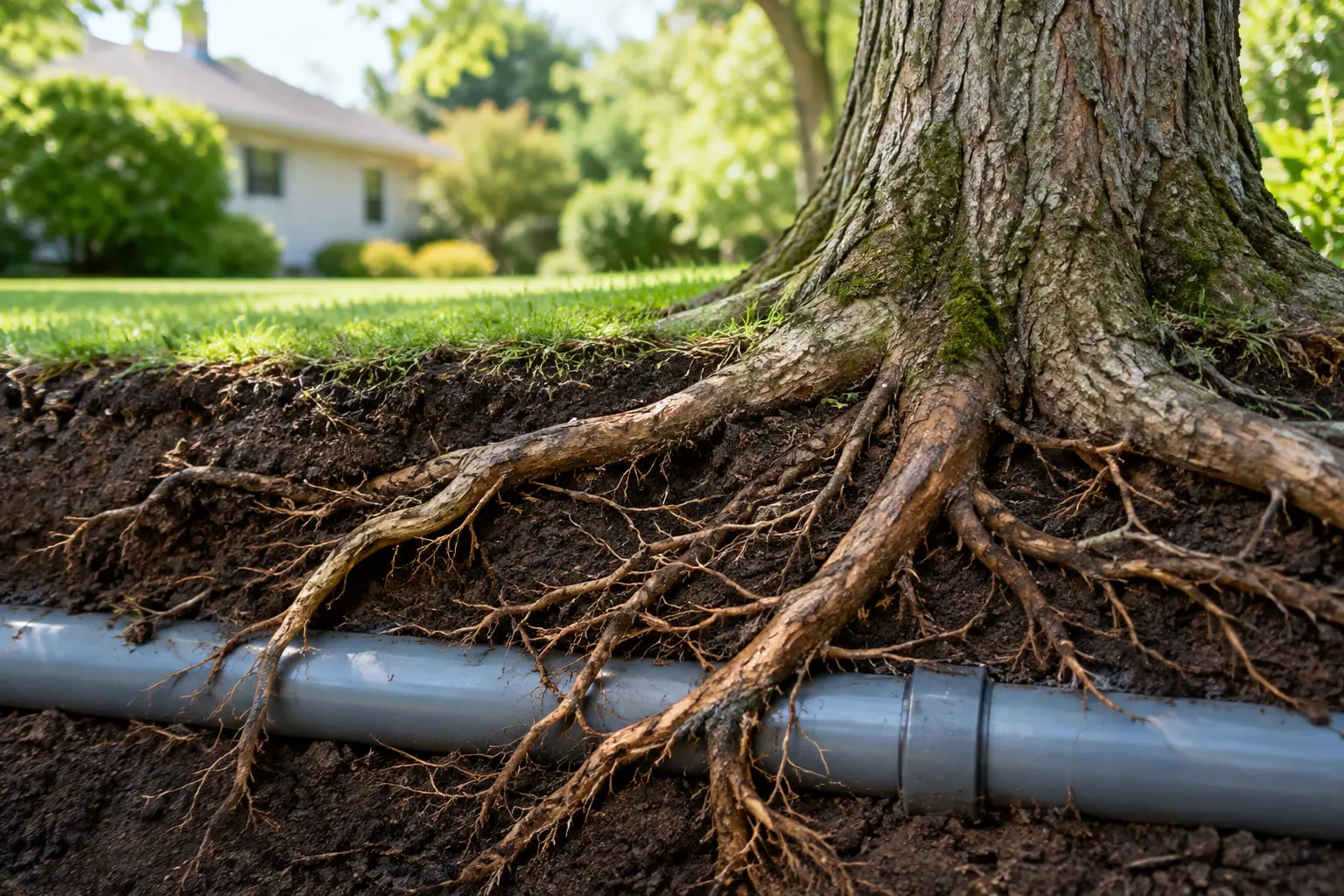
A drain can work perfectly for years, then start gurgling after rain or backing up when the washing machine empties. For many Sydney properties, the cause is not what has gone down the sink. It is a tree root finding a small opening in an ageing underground pipe. Knowing how to prevent tree roots blocking pipes can save you from a messy overflow, damaged landscaping and an avoidable emergency call-out.
Roots are persistent, but this is not simply a case of a tree "breaking" a good pipe. They are drawn to moisture and nutrients. A sound, correctly installed pipe gives them very little opportunity. Cracked sections, displaced joints, worn seals and older earthenware pipes give roots the access they need. Once inside, they trap paper, fats and other debris until water can no longer get through.
Why roots target underground drains
Tree roots naturally spread towards reliable sources of water. A leaking sewer or stormwater pipe creates exactly that environment, particularly through dry periods. Even a tiny seep at a joint can support fine feeder roots. Those roots thicken over time, and the pipe gradually becomes a collection point for more roots and waste.
Older homes across the North Shore, Northern Beaches, Hornsby Shire and Hills District can be more exposed where original earthenware or concrete drainage remains in the ground. These materials often have jointed sections, rather than the long sealed runs common with modern PVC pipework. That does not mean every mature tree is a problem. It means the condition, material and route of the pipe need to be understood before anyone starts cutting roots or removing established landscaping.
Stormwater lines can be affected too. If downpipes overflow, pits fill quickly or water pools near the home after a shower, roots may be restricting the line that carries roof water away. Treat this seriously. Poor stormwater drainage can put unnecessary moisture against foundations and make outdoor areas unusable.
Early signs of roots in your pipes
Root intrusion usually builds slowly. Catching it early is far less disruptive than waiting for a complete blockage. A single slow basin may be a local issue, but several fixtures draining poorly at once often point to a restriction further along the main drain.
Watch for toilets that bubble when another fixture is used, recurring blockages in the same bathroom or kitchen, bad smells outside near the drain line, or unusually green patches of lawn over buried pipework. You may also notice water coming from a gully trap, floor waste or overflow relief gully. That is a clear sign the system needs prompt attention.
Do not assume a temporary improvement means the issue is solved. Chemical drain cleaners rarely remove established roots and can be harsh on pipework, fixtures and the people using them. A plunger can shift a soft blockage close to the fixture, but it will not repair a separated joint several metres underground.
A recurring blockage needs a diagnosis
If a drain has needed clearing more than once, ask for a CCTV drain inspection. A camera inspection shows where the roots are, how dense they are and whether there is an underlying defect. It separates a simple maintenance issue from a pipe that needs repair or replacement.
This matters because root cutting alone can be the right answer in some situations, but not all. If the pipe is structurally sound and roots have entered at a small point, mechanical root removal followed by planned monitoring may offer excellent value. If the camera shows collapsed pipework, extensive fractures or multiple failed joints, clearing the roots without fixing the entry point is only a short-term reset.
How to prevent tree roots blocking pipes before they start
The most reliable prevention combines thoughtful garden planning with properly maintained pipework. Start by identifying where your sewer and stormwater lines run. Many homeowners know the location of a sewer inspection opening but not the full route to the street connection or rear drainage point. A plumber can map the line with CCTV and locating equipment, giving you useful information before you plant, pave or renovate.
When choosing new trees, consider their mature size and root behaviour, not just how they look in a pot. Large, thirsty species should be kept well away from underground drainage, retaining walls and foundations. The appropriate distance depends on the species, soil, pipe depth and condition, so there is no honest one-size-fits-all measurement. Your landscaper, arborist and plumber should be working from the same plan where substantial planting is involved.
For existing mature trees, avoid drastic pruning or removal without advice. Established trees add shade, privacy and value to a property, and sudden removal can affect soil moisture and ground movement. The practical goal is to maintain the pipe and manage the roots, rather than treating every tree as the enemy.
Repair leaks, cracks and failed joints properly
A root will keep returning if water continues to escape through the same defect. Once an inspection identifies the source, a licensed plumber can recommend the least disruptive durable repair. This may involve replacing a damaged section, relining a suitable pipe from within, or renewing an older run with new PVC drainage.
Relining can be a strong option where the pipe alignment is sound and access is limited by driveways, gardens or finished interiors. It creates a continuous internal liner that seals many joints and cracks without extensive excavation. It is not suitable for every drain, particularly a badly collapsed line or one with major misalignment. In those cases, excavation and replacement is the honest fix.
Good drainage work is not complete until the result is checked. CCTV footage after clearing or repair provides evidence that the line is open and confirms the condition of the pipework. It is the proof in the pipework, not a guess from whether the toilet happens to flush once.
Maintain drains before they become urgent
Properties with known root-prone lines benefit from a planned maintenance schedule. The right interval depends on the severity of prior growth, tree species, pipe condition and household use. Some drains may only need a periodic inspection. Others with old pipework and mature trees nearby may need preventative cleaning at regular intervals.
For strata and commercial sites, planned drain maintenance is especially useful. A blocked shared sewer can disrupt residents, customers and staff, while an after-hours overflow can become far more expensive than a scheduled inspection. Keeping camera records and service history also helps future managers make informed decisions rather than starting from scratch after each blockage.
A few everyday habits also reduce the chance that a minor root issue becomes a full obstruction. Keep fats, oils and food scraps out of kitchen drains, use appropriate toilet paper, and avoid flushing wipes labelled as flushable. Roots create the framework, but household waste is often what turns it into a blockage.
Should you install a root barrier?
Root barriers can help in carefully planned landscaping, particularly when installing new plants near sensitive areas. They should not be treated as a guaranteed cure for a damaged drain. Roots may grow beneath, around or beyond a barrier, and poorly installed barriers can redirect growth in unhelpful ways.
The better order of work is to inspect and repair the drainage first, then make planting decisions with the actual pipe route in mind. If a barrier is being considered, seek advice from an experienced landscaper or arborist as well as your plumber. Tree health, local soil conditions and the location of services all matter.
When to call a plumber
Call promptly if wastewater is backing up, a toilet will not clear, a gully is overflowing, or multiple drains are slow. Until help arrives, limit water use in the property. Do not keep flushing or running taps in the hope the blockage will clear, as this can force wastewater into bathrooms, laundries or outdoor areas.
For a recurring issue, request a clear explanation of what the camera found, what repair options are available and whether the recommendation deals with the root cause. Pioneer Plumbing Co. approaches root-affected drains with CCTV diagnostics, professional clearing and straightforward advice on the repair that makes sense for your property. You should know what is happening below ground before approving work above it.
A mature tree and reliable drainage can coexist. Give your pipes the same attention you give the rest of your home: investigate the early warning signs, fix defects properly and keep a record of what is underground. That small bit of planning can keep your garden thriving and your drains quietly doing their job.