
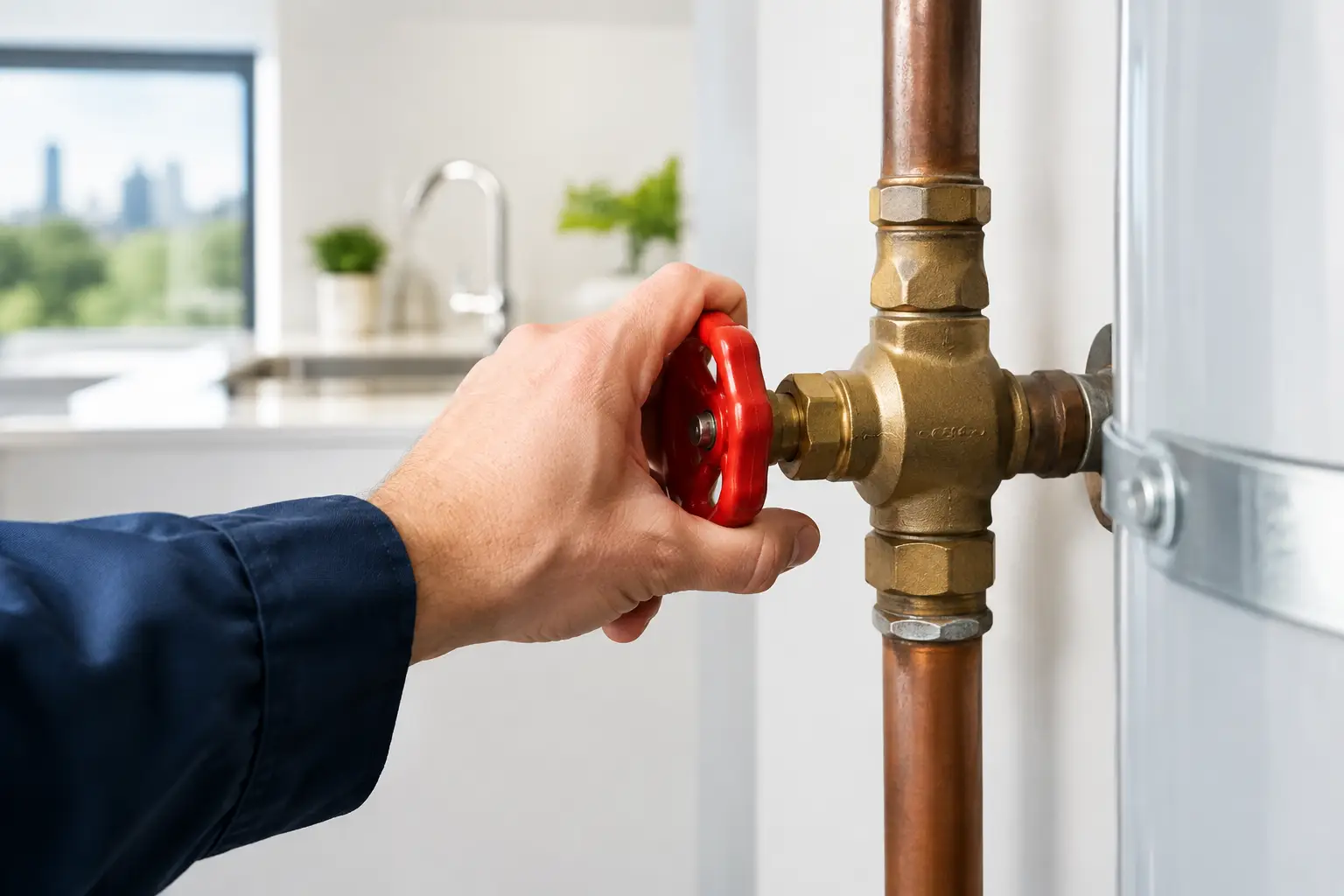
A burst flexi hose under the vanity can put a surprising amount of water through a bathroom in minutes. Knowing how to isolate water supply before there is a problem gives you time to protect floors, cabinetry and belongings while the right repair is arranged.
For most Sydney homes, isolating the water is straightforward once you know which valve controls what. The key is to act safely, avoid forcing old fittings and make sure the water has actually stopped before you leave the area.
How to isolate water supply safely
Start by identifying the scale of the problem. If one toilet, tap, washing machine or hot-water unit is leaking, you may be able to isolate that fixture only. If water is coming through a ceiling, flooding several rooms, or you cannot immediately find the source, turn off the main water supply to the property.
Before touching any valve, keep clear of electricity. If water is near a power point, light fitting, switchboard or appliance, do not stand in water or attempt electrical work. If it is safe to do so, turn power off at the switchboard from a dry location and call for urgent assistance.
Once the water is isolated, open a cold tap at the lowest practical point in the home, such as a laundry trough or outdoor tap. This relieves pressure in the pipework and helps drain residual water. Put towels, buckets or a tray under the leak if it can be done safely.
Isolate the fixture first, where possible
Many fixtures have a local isolation valve, commonly called a mini stop or service valve. It is usually found on the water pipe immediately below or beside the fixture. Under a basin, it may sit inside the vanity. Behind a toilet, it is generally on the wall near the cistern. Washing machines and dishwashers often have dedicated taps in a cupboard, laundry recess or behind the appliance.
Turn the valve clockwise gently until it stops, then test the affected fixture. A mixer tap may still run briefly as water drains from the line, but it should stop soon after. If it does not, the valve may not be closing fully, or the leak may be supplied from another line.
A local shut-off is the best option when it works. The rest of the household can still use the kitchen, bathrooms and hot water while the repair is completed. It is also useful in strata buildings, where the main valve may affect neighbouring lots or common property.
Do not force a stiff or corroded valve. Older valves can seize, leak around the spindle or fail when moved after years of sitting untouched. If it will not turn with gentle hand pressure, move to the main isolation point and arrange a plumber.
Finding your main water shut-off valve
In many freestanding Sydney homes, the main shut-off valve is near the water meter at the front boundary. Look in a meter box near the footpath, driveway, front garden or fence line. The box may be plastic, concrete or metal and can be covered by soil, leaf litter or mulch.
The meter assembly normally includes the water meter and one or more valves. The customer shut-off valve is generally on the property side of the meter. Turn this valve clockwise slowly to close it. Do not try to turn the meter itself, tamper with seals or interfere with utility equipment.
Some houses also have an internal main stop valve, often located near the kitchen, laundry, garage, hot-water system or where the water service enters the building. This can be more convenient during an emergency, particularly if the meter box is inaccessible.
After closing the valve, test a cold tap inside the home. A small amount of water may flow while pressure releases, but it should quickly reduce to nothing. If water continues to run normally, you may have shut the wrong valve, the valve may be faulty, or your home may have more than one supply connection.
Units, townhouses and strata properties
Apartments and townhouses need a little more care. Your lot may have an individual isolation valve in a service cupboard, laundry, bathroom ceiling space, car park riser or meter bank. In other buildings, the valve arrangement is controlled by strata or building management.
Avoid turning off a valve if you are not confident it serves only your property. Shutting down a common riser can interrupt water to other residents and may trigger further building issues. In an active leak, alert the strata manager, building concierge or emergency contact while taking reasonable steps to contain the water inside your lot.
For commercial premises, the main isolation point may be in a plant room, loading area, tenancy ceiling, service corridor or fire-services enclosure. A clear site plan and labelled valves are worth having before an after-hours emergency occurs.
What to do with hot water, toilets and appliances
Turning off the cold-water main will usually stop fresh water entering toilets, taps and most hot-water systems, but it does not remove water already stored in pipes or tanks. Hot taps can still run for a short time, and a storage hot-water unit remains full. Treat hot water carefully, especially after a leak near the cylinder, tempering valve or pipework.
Do not isolate gas yourself as part of a water-leak response unless there is a separate gas emergency and you know exactly what to do. Gas fitting and gas appliance work should be left to a licensed professional.
If the leak involves a washing machine or dishwasher, turn off its individual supply taps and switch the appliance off at the power point only if the area is dry and safe. Do not pull an appliance out while water is pooled around it. A failed inlet hose, loose connection or leaking valve can look minor until the appliance is running unattended.
Toilets deserve quick attention too. If a cistern will not stop filling, lift the lid and raise the float if possible, then close the small isolation valve behind the toilet. If there is no working local valve, isolate the main supply. This can prevent a continuous overflow that damages flooring or leaks into the level below.
When the valve will not close or the leak continues
A main shut-off valve should be treated as part of your home’s essential maintenance, not a fitting to discover during a flood. If it is difficult to operate, drips from the handle or does not fully stop the water, have it repaired or replaced. A reliable valve is inexpensive peace of mind compared with the damage caused by an uncontrolled leak.
Call a plumber promptly when you see water coming from a wall, ceiling or slab; the meter continues to move when all taps are off; pressure has suddenly dropped throughout the home; or the shut-off valve is inaccessible, damaged or ineffective. These signs can point to a hidden burst pipe, failed pressure-limiting valve, underground leak or another issue that needs proper diagnosis rather than a temporary patch.
Take a few photos before drying the area if it is safe to do so, particularly where cabinetry, ceilings, flooring or common property may be affected. Then remove wet items, mop up standing water and improve ventilation. The sooner moisture is controlled, the lower the risk of swelling, mould and secondary damage.
Make isolation easy before an emergency
Take ten minutes this weekend to locate the main valve, confirm that it works and show everyone in the household where it is. Keep the meter box accessible and avoid burying it beneath landscaping or storing heavy items over it. If the valve is hard to reach, poorly labelled or seized, have it addressed before it becomes urgent.
For property managers and commercial operators, label isolation points clearly and keep the information available to occupants, cleaners and after-hours contacts. One clear instruction can prevent a small leak becoming a costly call-out and a major repair.
When water is where it should not be, fast isolation protects the property. The repair still needs to address the cause. Pioneer Plumbing Co. can locate the fault, explain the options in plain English and leave the pipework clean, compliant and built to last.